
- Details
ÉCOLE DE PHYSIQUE DES HOUCHES: FUNDAMENTALS OF AERODYNAMIC FLOW AND COMBUSTION CONTROL BY PLAMAS
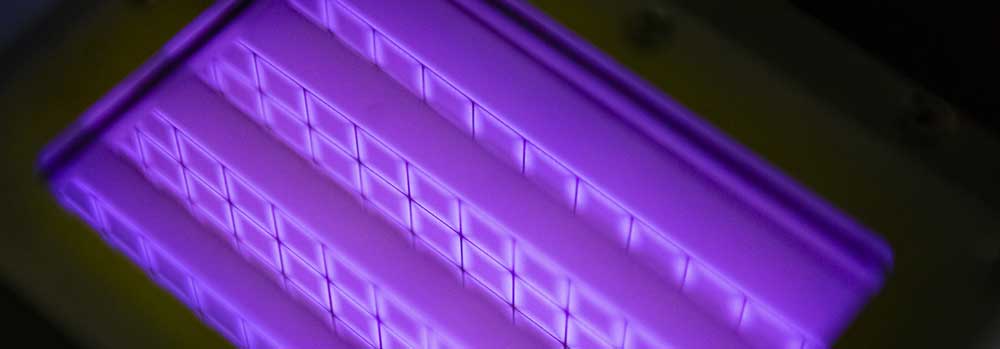
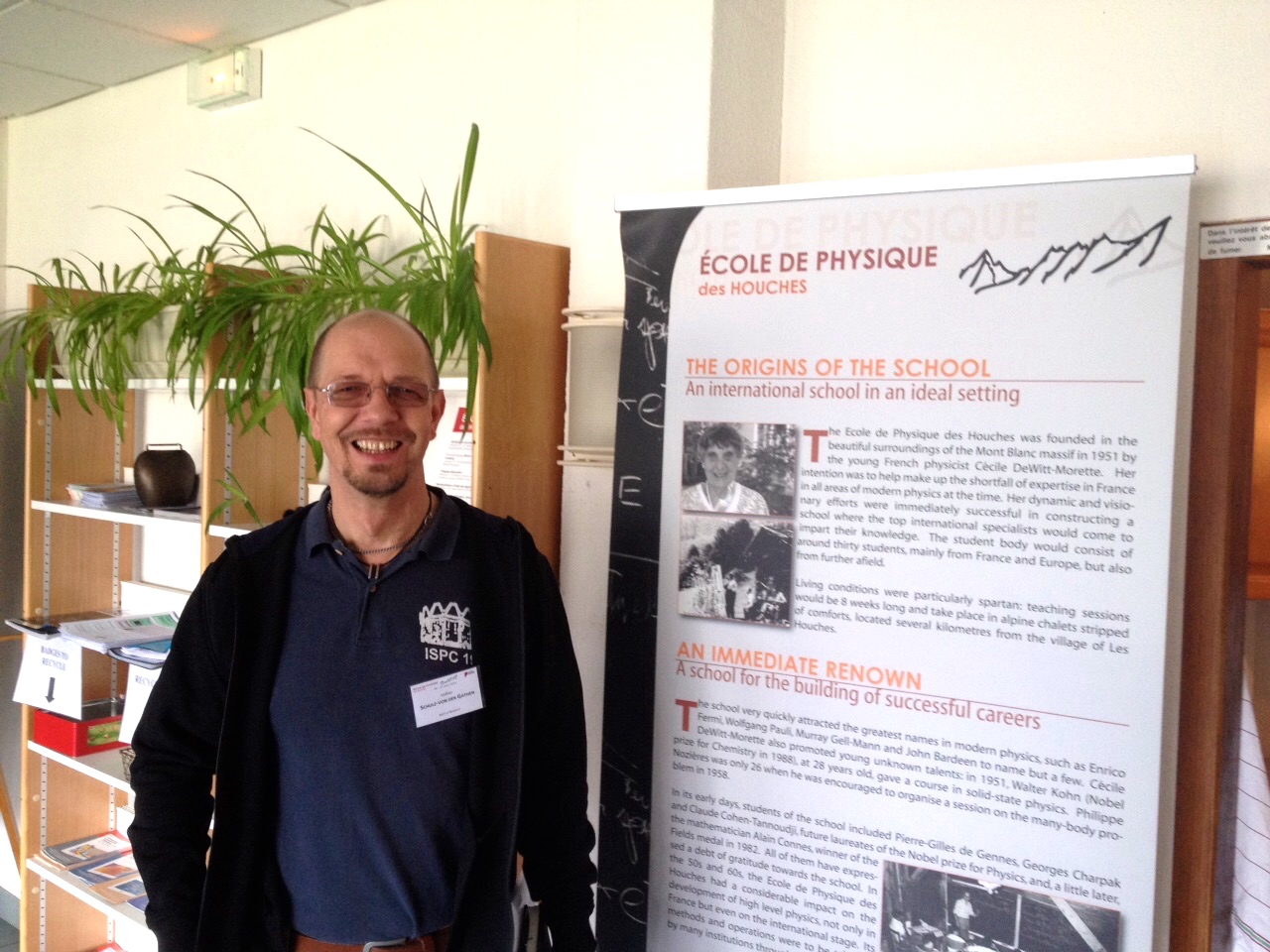
Dr. Volker Schulz-von der Gathen (EP2, RUB) gives a talk about "Dynamics of the discharge evolution of micro discharge arrays" at the École de Physique des Houches in France (from April 12, 2015 to April 17, 2015).
This conference is the fifth of a cycle of conferences dedicated to the fundamental issues in the scientific disciplines relevant to aeronautics and space development. The previous editions of this workshop were held in Villa Monastero, Italy (2007), Les Houches (2009 & 2011) and Aussois (2013). The program will feature twenty invited lectures. Presentations will again address fundamental issues, experimental challenges, measurement methods and advanced numerical simulation.
The conference is managed by a team from the Paris region, with Svetlana Starikovskaia (Chairperson, Laboratoire de Physique des Plasmas, Ecole Polytechnique), Christophe Laux (vice-Chair, Ecole Centrale de Paris), Jean-Pierre Taran (local organisation, Onera) and a Steering Committee composed of leading scientists in the field.
The program of invited lectures can be found here.
link to website school
- Details
TP4
PROF. ALEX LAZARIAN
Prof. Alex Lazarian from the University of Wisconsin-Madison (USA) is a guest at the Institute of Theoretical Physics IV / Chair of Space and Astrophysics (Prof. Dr. Reinhard Schlickeiser) from May 1 to 31, 2015. His stay is supported by AvH Foundation in the framework of network funding.
- Details
TP4
DR. GIANFRANCO BRUNETTI
Dr. Gianfranco Brunetti is staying at our Institute of Theoretical Physics IV / Chair of Space and Astrophysics (Prof. Dr. Reinhard Schlickeiser) as a guest from 01.04.2015 to 31.07.2015. The Alexander von Humboldt Foundation has awarded him a research prize, the Friedrich Wilhelm Bessel Research Award. He comes from the Instituto Nazionale die Astrofisica (INAF) in Bologna, Italy. Another stay next year is planned.
Dr. Brunetti will study the acceleration of charged particles in galaxies and galaxy clusters to predict their observational radiation signatures from radio wave to gamma-ray regions.
- Details
MOHAMED MOKHTAR HEFNY AND JUN.-PROF. DR. JAN BENEDIKT VISIT TO INSTITUTE OF PLASMA PHYSICS (IPP) IN CZECH REPUBLIC
PhD student Mohamed Mok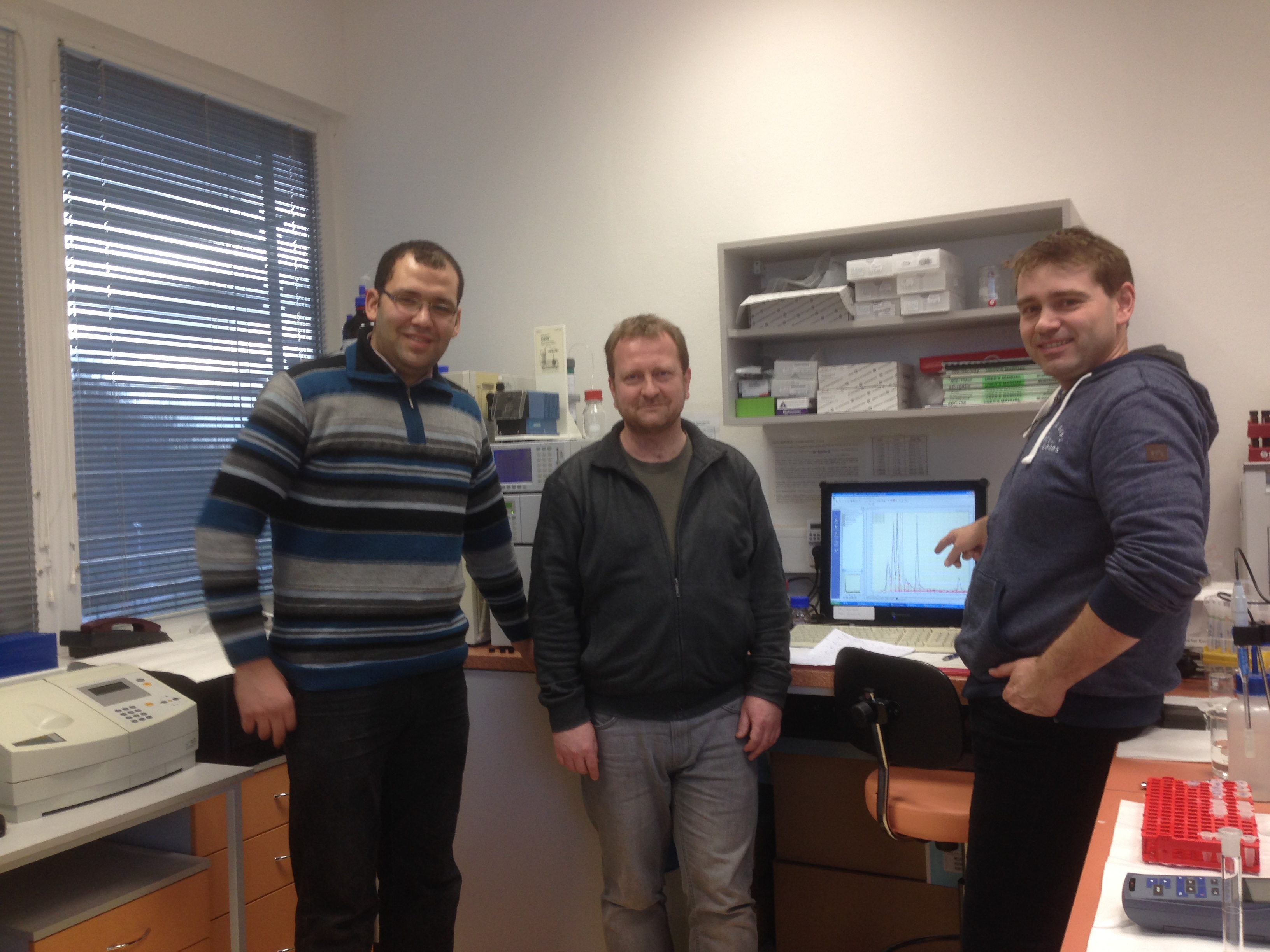 htar Hefny went to Prague from March 02, 2015 to March 20, 2015 with his supervisor Jun.-Prof. Dr. Jan Benedikt. He visited the group of Dr. Petr Lukes, Institute of Plasma Physics (IPP) in Czech Republic. This scientific mission was within the COST action "TD1208 Electrical discharges with liquids for future applications" and STSM Topic was "Chemical analysis of the reactive species produced in water treated by plasma produced radicals or VUV photons" and its Reference Number is "COST-STSM-ECOST-STSM-TD1208-020315-056481". They used the microscale atmospheric pressure plasma jet in treating water and analyzed the reactive species after treatment using ion and liquid chromatography and spectrophotometric. they used the micro-APPJ to generate a remote cold plasma at atmospheric pressure above the treated liquid in a He controlled atmosphere, they designed for that a small reactor with putting 3 ml of the prospective treated water inside it and making the plasma 4 mm above it. Treatment of water have done by many gas mixtures like He, He with O2 and He with N2 with and without water vapor. During the STSM they focused on the study of aqueous-phase chemistry of reactive oxygen species (ROS) and reactive nitrogen species (RNS) generated by plasma jet in the treated water. they made a lot of studies of H2O2, NO2-, NO3- synthesize in the treated water, they also studied the reaction pathways of phenol degradation induced by plasma in deionized water and used the phenol as a chemical probe.
- Details
TET
PROF. DR. JULIAN SCHULZE
From March 23 to 27, Prof. Julian Schulze from West Virginia University, USA, visited the Chair of Theoretical Electrical Engineering at Ruhr-Universität Bochum. The focus was on the scientific exchange with the chairs AEPT and TET as well as the work with Sebastian Wilczek, PhD student, on the common research topic. The research cooperation between the two universities in the field of plasma technology will be further expanded and consolidated in the future. Prof. Schulze studied, received his doctorate and habilitated at the Ruhr-Universität Bochum. As a promising young scientist in the field of low-temperature plasma physics, he was already awarded the Hans Werner Osthoff Plasma Physics Prize in 2012.
The scope and outstanding quality of his work in the few years from physics diploma to doctorate to habilitand at the Institute of Experimental Physics V of the RUB was impressive. His experiments have significantly advanced the understanding of the physics of high-frequency discharges. After a short period as a post-doc at the Hungarian Academy of Sciences, he is now Assistant Professor at West Virginia University and is considered a world-renowned expert in the field of RF plasmas. Together with Sebastian Wilczek, Prof. Schulze studies the heating/dynamics of electrons in low pressure capacitive discharges. This heating mechanism has a crucial influence on the plasma composition and needs to be understood in order to control industrial coating and etching processes much better. Based on previous collaborations, an article on the confinement quality of high-energy beam electrons was published in March 2015. The collaboration will continue in the future. In the summer semester, Prof. Schulze offers a block seminar over five days for students and interested parties. With his visit to the RUB, further interesting topics in plasma technology were discussed and investigated. Joint publications are planned.
- Details
TP4
DR. ILAN ROTH
From April 28-30, 2015, Dr. Ilan Roth from Space Sciences UC Berkeley, University of California, USA will be a guest of Prof. Dr. Reinhard Schlickeiser (Theoretical Physics IV). As part of the seminar "Space and Astrophysics" he will give a talk on "Knotty Invariants: Structure & Evolution of Magnetized Fluids" on 4/29 at 10:15 am (NB 7/67) and on "Solar/Planetary/Galactic Relativistic Electrons: Common Denominator?" on 4/30 at 10:15 am (NB 7/67). Interested parties are welcome!
ABSTRACT "KNOTTY INVARIANTS: STRUCTURE & EVOLUTION OF MAGNETIZED FLUIDS"
Magnetic fields in the laboratory and in space are generally depicted as closed loops or curves anchored at physical foot-points, both deformed through a set of stretching and bending procedures. This classification allows one to describe most of the magnetic configurations in fusion research, in magnetic confinement and in astrophysical environments as 2D curves modified by slide, poke or twist.
However, dynamically evolving 3D magnetic structures may form loops which cannot be transformed to an equivalent closed (anchored) two-dimensional curve. Hence, the resulting curves' characterization may be generalized through their unique topology. The analogy between MHD and knot theory offers a new classification of magnetic flux tubes. Ideal MHD fluid describes non self-intersecting loops with smooth stretching and bending in the viscous surrounding fluid, identically to mathematical knots. The crossings of a 3D structure projection are assigned mathematical operations resulting in new invariants which are preserved under stretching and bending, forming robust entities. We conjecture that the field which emerges from the solar photosphere appears in the form of a prime knots, knots which cannot be composed from two nontrivial knots. Observations of intermittent ion flux drops in impulsive solar flares can be attributed to the formation of the simplest knotty structures – torus knots. Similarly, accumulation of small-scale localized spatial structures seen in simulations and inferred experimentally in the cascading solar wind plasma can be related to the stability of the 3D knots. Implications for dynamo processes and decay and for stability of complex magnetic configurations due to preservation of topological invariants are suggested.
ABSTRACT "SOLAR/PLANETARY/GALACTIC RELATIVISTIC ELECTRONS: COMMON DENOMINATOR?"
Observations of electron distribution functions with sub or super relativistic tail or power law(s) at high energies and with elongated tails are common in space plasmas. These distributions are measured in situ or deduced remotely in various magnetized environments. The in situ measurements relate to enhanced fluxes of relativistic electrons principally (i) in the terrestrial outer radiation belts and (ii) at the interplanetary medium at heliospheric distances of 1 AU with related solar observations, or (iii) remotely at galactic distances through various radiation emissions. Due to the similarity between the observations at the relativistic radiation belts and solar electrons it is suggested that a specific bootstrap mechanism to relativistic electrons operates at these environments. Several possible solutions to previously ignored aspects of the mechanism will be offered. New mathematical description for the formation of an energetic distribution function tail will be described.
- Details
EP5
PROF. DR. YI-KANG PU
Prof. Dr. Yi-Kang Pu from the Department of Engineering Physics at Tsinghua University (China) will be a guest of Prof. Dr. Uwe Czarnetzki (EP5) from April 4-9, 2015.
- Details
MEET AND GREET - WOMEN IN PLASMA
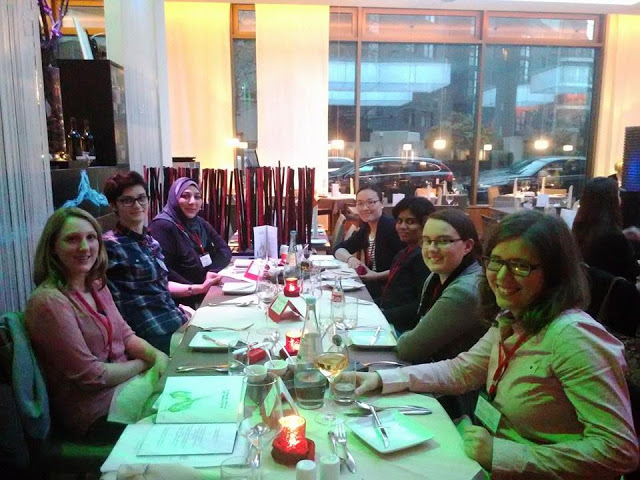
The SFB-TR 87 invited female scientists to the first „Meet and Greet – Women in Plasma“, an event focused on the exchange and networking of women involved in plasma science. The get together took place in the evening (6:30pm) of March 20th, 2015 at Hotel Meliá in Düsseldorf.
link to Women in Plasma
- Details
DR. SIMON HÜBNER AN DER TU EINDHOVEN
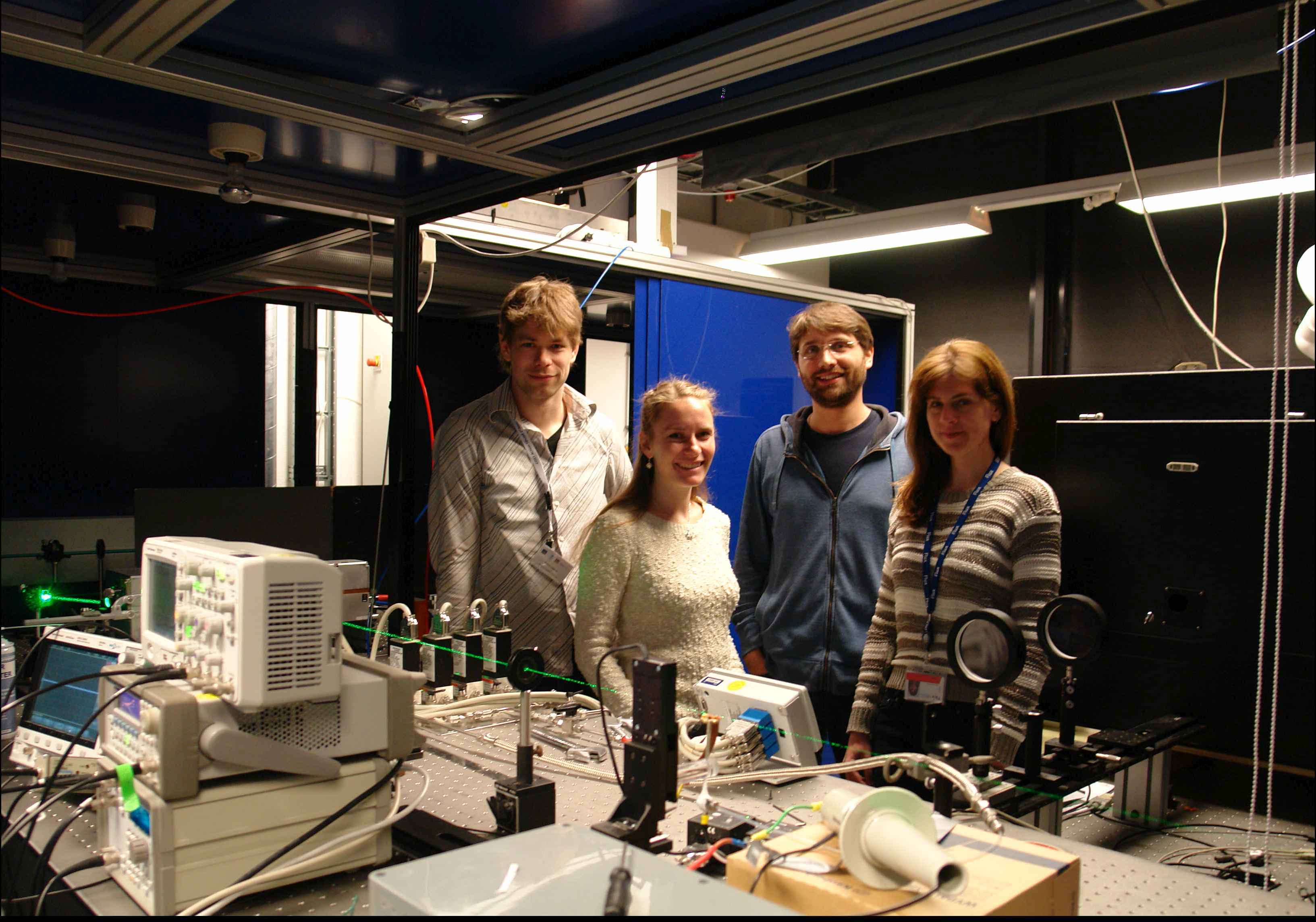 Vom 23. März bis zum 1. Mai 2015 ist Postdoc Dr. Simon Hübner (Experimentalphysik II) zu einem Forschungsaufenthalt an der TU Eindhoven (Niederlande).
Foto von links: Simon Hübner, Claire Douat von der TU Eindhoven, Joao Santos Sousa vom LPGP, University Paris Sud und Ana Sobota von der TU Eindhoven.
link to ER-3 Materials design using reactive atmospheric pressure plasmas
MATERIALS DESIGN USING REACTIVE ATMOSPHERIC PRESSURE PLASMAS
The present day society needs coatings. That is for various high and low-tech products, such as wear-resistant coatings on plastic parts or barrier coatings to keep delicate food in good containment. Then there is the large field of coatings for optics, such as the popular anti-reflective coating on glasses. But one should keep in mind that also more or less all modern optical technologies like lasers will hardly work without such coatings.
A different approach is to treat surfaces without necessarily any deposition in order to a lter its properties. In this way for example plastic surfaces can be varied from extremely water-loving to water-repellant. Or specific medical active compounds, like antibiotics can be bound to surfaces.
In order to promote the necessary chemical reactions, the industry usually relies on simply heating and reactive chemicals, sometimes toxic, sometimes very inefficient. On the contrary, plasmas have the unique ability to promote non-equilibrium chemistry. That means a chemical reaction is induced without the reaction partners have to be hot or in a chemical reactive state. It is like conversion of electricity, to drive the plasma, to bonding energy of atoms and molecules.
An even more convenient way to achieve such things is using atmospheric pressure plasmas. The investment to build the plasma source is significantly reduced and delicate materials can be treated as well. However, it is not that simple. Atmospheric plasmas are by nature small in size, as pressure times diameter is somewhat constant. Another challenge lies in the high density of atmospheric pressure gas. An energetic particle created in the plasma is lost very rapidly because of the huge amount of collisions and the non-equilibrium nature does not work well. Clever ways have to be thought of to bring the energy carried by ions and highly excited species from the plasma to the target.
A part of this project is the study of these ‘plasma-activated’ atoms and molecules. That can be achieved by mass spectrometry. Specific ions and neutrals can be counted and in case of neutrals even absolute densities are measured. As the detection has to be in low pressure, a multi-stage system is used. With these techniques the nature of the dominant ion emanating from the plasma can be determined or the dissociation degree of e.g. nitrogen or oxygen can be found.
The second major part in this project is the film characterization. For instance organosilicon molecules, can be added to the plasma and form a SiO-like layer on a substrate. Now, the different degree of oxygen added to the process changes dramatically the amount of carbon present in the film. The latter can be studied very well by infrared absorption of the molecular bonds.
- Details
EP2
REMI DUSSART UND VALENTIN FELIX
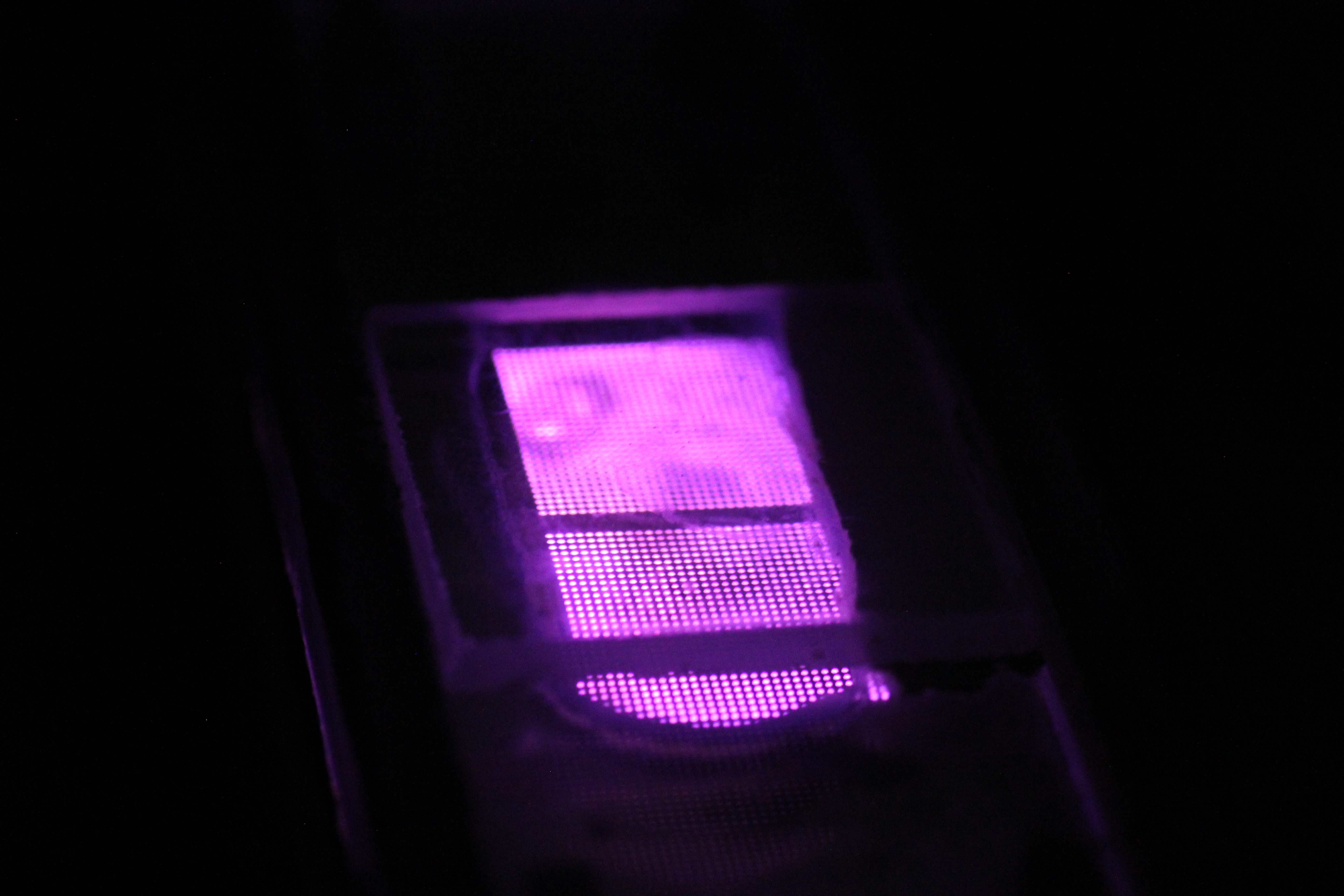
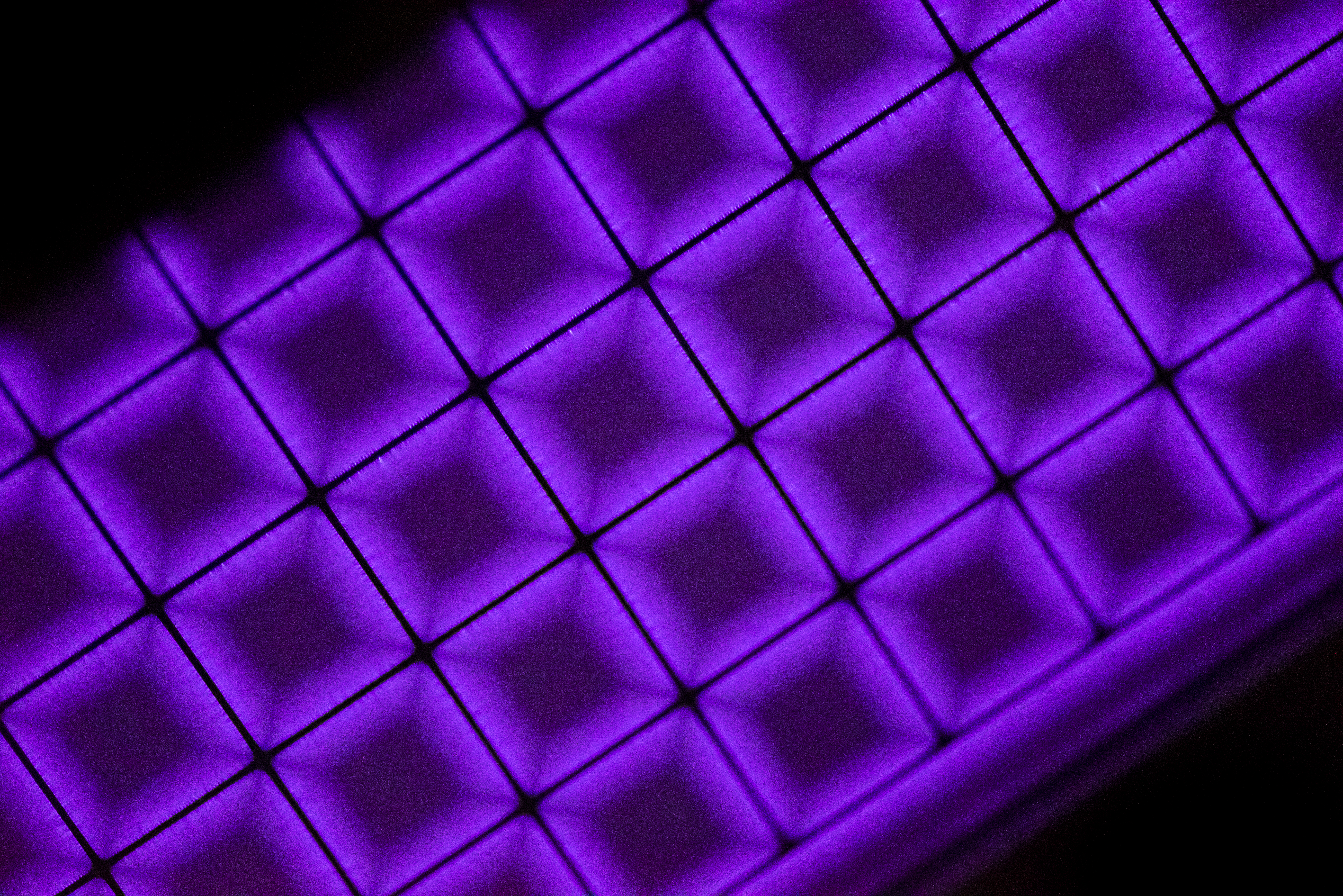
From March 16-18, 2015, Prof. Dr. Remi Dussart and PhD student Valentin Felix from GREMI are guests of Dr. Volker Schulz-von der Gathen and PhD student Judith Golda. Valentin will stay until March 20. Pascal Vogel, who was at GREMI for six months via Erasmus and developed the arrays with Valentin as part of a project with Remi Dussart, will also be there and is currently being tested.
- Details
TET
DR. SVEN ZIMMERMANN
On March 24, 2015, Dr. Sven Zimmermann from the TU Chemnitz and the Fraunhofer Institute for Electronic Nano Systems, respectively, will give a lecture in ID 04/401 as part of the Faculty Colloquium (Eletrotechnology and Information Technology). The title is "28 nm Technologies and Beyond: Challenges of Plasma Processing". Interested parties are cordially invited.
Dr. Sven Zimmermann is a guest of PD Dr. Thomas Mussenbrock (TET).
Kolloquiumsvortrag Sven Zimmermann
ABSTRACT: Plasma patterning processes play a key role in modern ULSI device fabrication. With further
scaling of device dimensions plasma process characteristics become more and more the
limiting factor in pattern minimization not least due parasitic effects caused by different plasma properties. Such effects are notching, footing and source/drain destruction during high-k/metal-gate patterning as well as the most critical sidewall damage while etching trenches an
d vias in back-end of line technologies for ultra low-k dielectrics. Finally the charge
damage of thin gate oxides during plasma processing results in decreased reliability and function
ality of completed devices. The lecture overviews typical challenges during plasma patterning processes in 28 nm and 22 nm technology nodes by means of today’s back-end of line integration schemes. Different plasma diagnostic methods give an insight into physical and chemical conditions
of different etch chambers and their influence on process results and damaging behavior.
Finally a plasma assisted chemical repair process for etch damaged ultra low-k sidewalls will
be introduced. This process bases on the fragmentation of different organosilicon molecules using in a downstream plasma chamber, whereby significantly enhanced repair efficiency can be achieved.