
Focus on plasma physics or plasma technology
 The members of the Plasma Science Hub are committed to research-oriented teaching for bachelor and master students at the RUB. The lecturers offer numerous courses and lectures in English to make learning and knowledge about materials science more accessible for international students.
Ruhr-Universität Bochum (RUB) offers an international English-taught Master’s program in Plasma Science, jointly supported by the Faculties of Electrical Engineering and Information Technology, and Physics and Astronomy.
The program features two complementary tracks:
- Electrical Engineering: Focuses on the application of plasma science in engineering contexts.
- Physics: Concentrates on the fundamental aspects and theoretical understanding of plasma phenomena.
By combining disciplinary depth with interdisciplinary integration, the program aims to provide students with a comprehensive understanding of plasma science. The curriculum covers a wide range of topics, including plasma generation and diagnostics, plasma-surface interactions, and industrial applications of plasma technology.
The Master’s program in Plasma Science at RUB is designed to establish the university as a leading international center for plasma education and research. Students will have access to state-of-the-art facilities and opportunities to engage in cutting-edge research projects.
Bachelor of Science Students
 Students pursuing a Bachelor of Science degree in the
- Faculty of Physics and Astronomy,
- Faculty of Electrical Engineering and Information Sciences
are actively involved in the research activities of the department.
Principal Investigators (PIs) of the Plasma Science Hub participate in a mentoring program designed to support physics students throughout their studies.
During the Bachelor phase, students are integrated into ongoing research projects, allowing them to gain hands-on experience in experimental and theoretical plasma research.
Bachelor Presentation Day
As part of the Bachelor program, a Presentation Day is organized for all Bachelor candidates.
Each student presents their research topic to fellow candidates and supervisors within the group.
- Presentation duration: 15 minutes + 5 minutes discussion
- Content: Introduction of the research topic and an outline of the planned work for the upcoming months
This event provides an excellent opportunity to practice scientific presentation skills and fosters lively discussions—offering valuable preparation for future conference presentations.
Participation in the Presentation Day is mandatory for all Bachelor candidates.
The event has proven to be a stimulating and fruitful experience, encouraging exchange and engagement among students.
Plasma Physics and Complex Plasmas
Area: Physical Focus Area
Teaching Period: Winter and Summer Semester (WS + SS)
Module Type: Elective
Workload / Credits: 300 hours / 10 CP
Recommended Semester: From 1st semester onward
Duration: 1–2 semesters
Learning Outcomes
Students gain a deeper understanding of plasma physics and complex plasma systems. The module introduces key research areas and methods, providing the foundation for specialization and preparation for a Master’s thesis in both experimental and theoretical plasma physics.
Course Content
- Single particle motion and kinetic theory
- Vlasov equation and Landau damping
- Fluid descriptions, plasma waves, and instabilities
- Hydrodynamic fundamentals, characteristic time and length scales
- Plasma diagnostics and boundary layer physics
- Plasma–surface interactions
- Discharge types, heating mechanisms, and plasma chemistry
- Light generation, plasma deposition, and plasma etching
- Waves and turbulence in plasmas
Recommended Literature
- F. F. Chen: Introduction to Plasma Physics and Controlled Fusion
- M. Lieberman & A. Lichtenberg: Principles of Plasma Discharges and Materials Processing
- Reece Roth: Industrial Plasma Engineering
- T. J. M. Boyd & J. J. Sanderson: The Physics of Plasmas
- D. R. Nicholson: Introduction to Plasma Theory
- U. Frisch: Turbulence
- W. D. McComb: The Physics of Fluid Turbulence
- S. B. Pope: Turbulent Flows
Teaching Methods
Lectures, Exercises, and Seminars.
Assessment and Credit Requirements
 To receive credit points, students must complete all components of the module. The module representative records individual achievements and assigns a final grade, which must be submitted to the Examination Office.
The final grade is calculated as the weighted average of all graded components, according to their respective credit points (CP). If the total number of earned CPs exceeds 10, the average is based on the actual total achieved. Partial weighting of individual courses is not permitted.
If one or more components are ungraded, the final grade for the physical focus area is determined via an oral examination (see §5 (4b) PO B.Sc./M.Sc. 2006).
Credit points for courses not listed in the catalogue are calculated as the number of semester hours per week (SWS) plus one additional CP for a graded performance.
Module Chair: Prof. Dr. Achim von Keudell
Download Module Manual
M.Sc. Plasma Technology
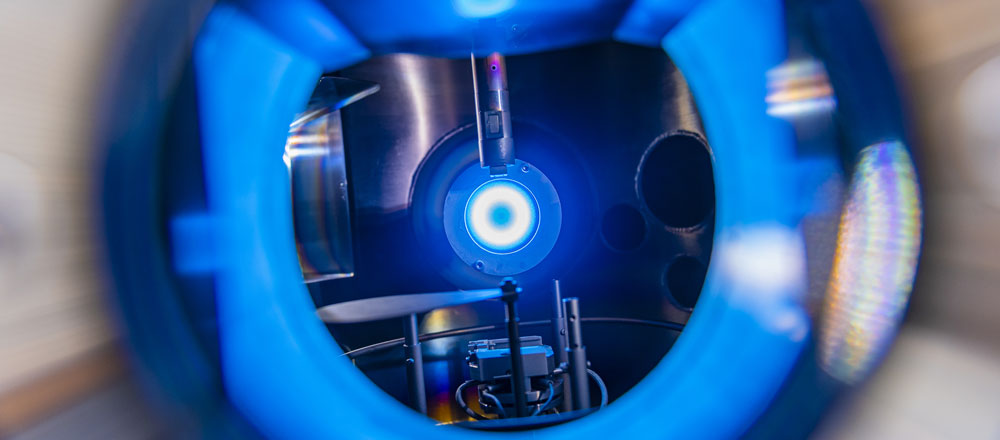
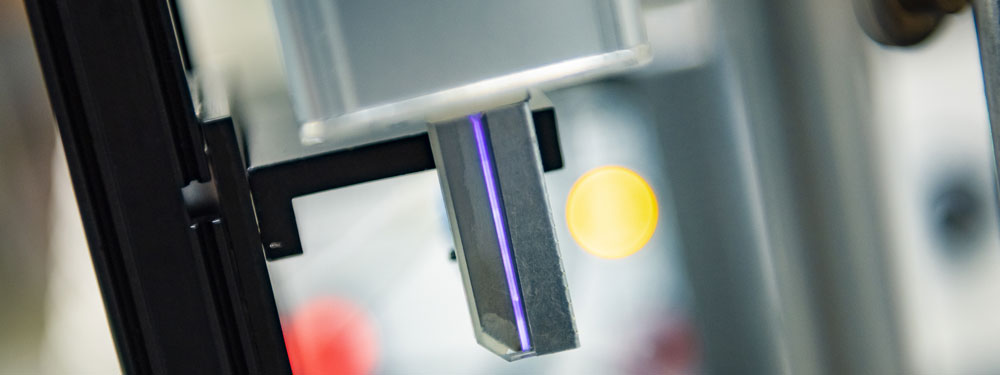
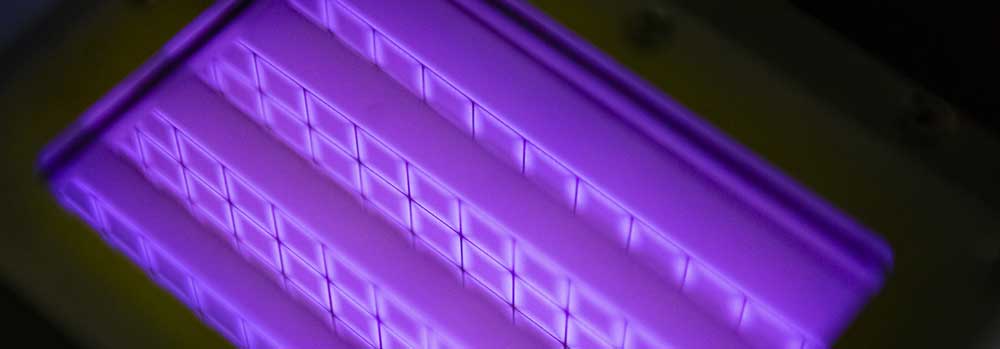
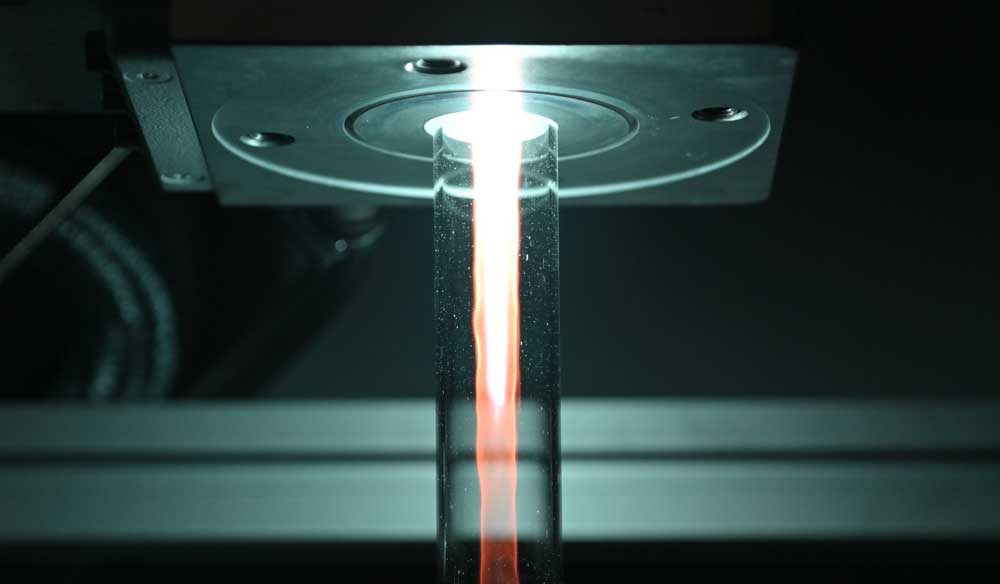
Plasma technology provides innovative solutions across various fields of science, technology, and medicine. Plasmas are ionized, highly energetic gases—often described as the fourth state of matter. Due to their unique properties, plasmas are a versatile tool used for generating light and radiation, fabricating computer chips, modifying and coating surfaces, and initiating or accelerating chemical processes.
Focus Areas in Plasma Technology
- Plasma Processes and Plasma Diagnostics
- Disinfection of packaging materials and medical implants
- Environmentally friendly and energy-efficient gas discharge lamps
- Modelling and simulation of plasmas
The Plasma Technology major is one of eight specialization options within the Master’s programme in Electrical Engineering and Information Technology at Ruhr University Bochum. The standard period of study is four semesters, leading to the degree Master of Science (M.Sc.).
Interested?
Our study advisors are happy to assist you:
Dr. Sven Zimmermann and Dr.-Ing. Esther Cremer-Bujara
Email:
Phone: +49 234 32-29474
Find the Academic Advising ETI/IT here
M.Sc. Laser and Photonics
The photon – often referred to as the “light particle” – has become a major driver of technological and economic progress in Germany. The English-language Master's programme in Lasers and Photonics educates specialists in this rapidly growing field.
Students explore advanced topics such as optical measurement technology, laser-based materials processing, and optical system design. From the very beginning, they conduct their own research – for example during the SOWAS internship, which focuses on interdisciplinary research tasks instead of pre-fabricated experiments.
Active participation in ongoing research projects and the presentation of individual results at scientific conferences are explicitly encouraged. Students may also apply for funding to carry out their own research projects, ideally in collaboration with an international partner institution. Guest lectures by international experts further strengthen the programme’s global perspective.
Participants also take part in a Journal Club to stay informed about the latest developments in lasers and photonics research.
About the Programme
This unique programme in North Rhine-Westphalia is jointly supported by the Faculty of Electrical Engineering and Information Technology and the Faculty of Mechanical Engineering. The Plasma Science Hub and the Materials Research Department are also involved in teaching and supervision.
The programme is aimed at graduates with a Bachelor's degree in Electrical Engineering, Information Technology, Mechanical Engineering, Physics, or related natural sciences.
For more information, visit:
Official Programme Website – M.Sc. Lasers and Photonics
International Master Lasers and Photonics
Lasers and photonics represent one of the most dynamic and economically relevant research areas of our time. Since its launch in 2011, the international Master's programme at Ruhr University Bochum has combined academic excellence with hands-on experience in cutting-edge photonics research.
In addition to lectures and lab work, students benefit from research internships, international conference participation, English language courses, and collaborative projects with international research partners.
If you hold a Bachelor's degree in Physics, Electrical Engineering, or Mechanical Engineering and are interested in joining this programme, we welcome your inquiry!
Contact
Prof. Dr. Martin Hofmann
Chair of Photonics and Terahertz Technology
Department of Electrical Engineering and Information Sciences
Ruhr University Bochum
Universitätsstraße 150, ID 05/439
Telephone: +49 (0)234 32-27700
Email:
M.Sc. Engineering Physics
The Engineering Physics specialization is designed for students with a strong interest in physics-based approaches to engineering. It focuses on electromagnetically dominated and multiphysical systems in which electric and magnetic fields, waves, particles, transport processes, material properties, and nonlinear dynamics are closely interconnected.
The program combines a solid foundation in electromagnetic field theory, quantum mechanics, plasma engineering, photonics, and microsystem technology with modern methods of theoretical analysis, modeling, simulation, experimental diagnostics, and laboratory work.
Students learn to analyze complex physical and technological systems from a theoretical perspective, investigate them experimentally, develop quantitative models, and contribute to their technological implementation.
More Information
The specialization includes courses in:
- Plasma Engineering
- Photonics
- Quantum Mechanics
- Fields, Waves and Particles
- Microsystem
- Plasma Diagnostics and Laboratory Experiments
Students can further specialize in areas such as Plasma Engineering, Photonics, Microsystem Technology, and Modeling and Simulation.
Engineering Physics provides a research-oriented profile within the Master's degree program in Electrical Engineering and Information Technology. It prepares students for scientific and industrial careers in modern high-technology fields, including:
- Plasma and surface engineering
- Optical technologies and photonics
- Semiconductor and microsystem technology
- Numerical modeling and simulation
- Related areas of applied physics and engineering
Interested?
Program Coordinator
Prof. Dr.-Ing. Thomas Mussenbrock
Early Career Researchers
PhD students are embedded into the graduate program of the hosting university as well as graduate programs of the different research centres. As example, different possiblities are listed:
- Ruhr University Bochum Research School
- Integrated Gradute School of the SFB 1316 or SFB 1491
- International Plasma School "Low Temperature Plasma Physics: Basics and Applications" and its Master Class
- Computational Plasma Physics School
- WELT-PP: Workshop on the Exploration of Low Temperature Plasma Physics in Rolduc