
- Details
EP5
THIERRY BELMONTE
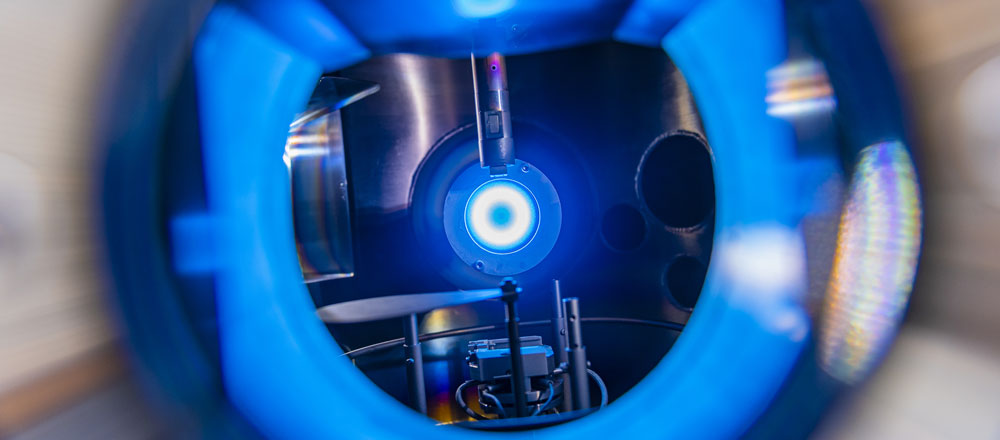
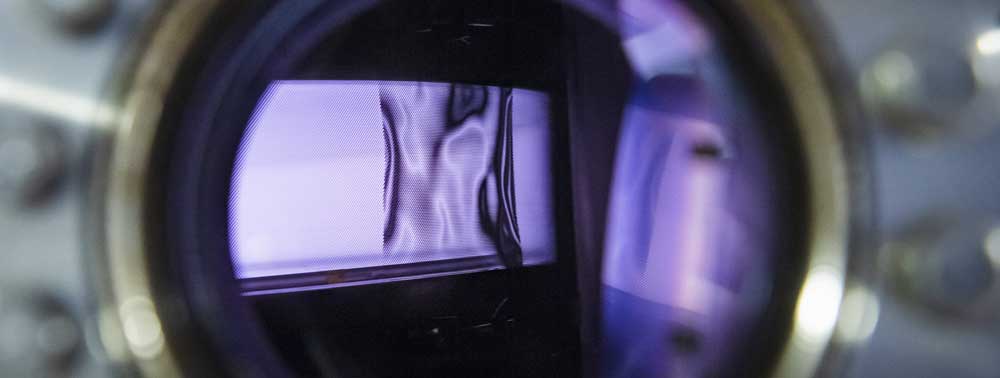
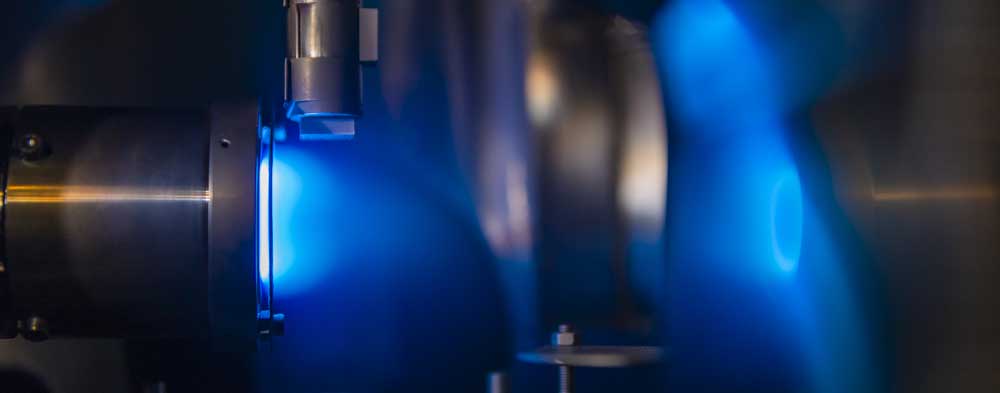
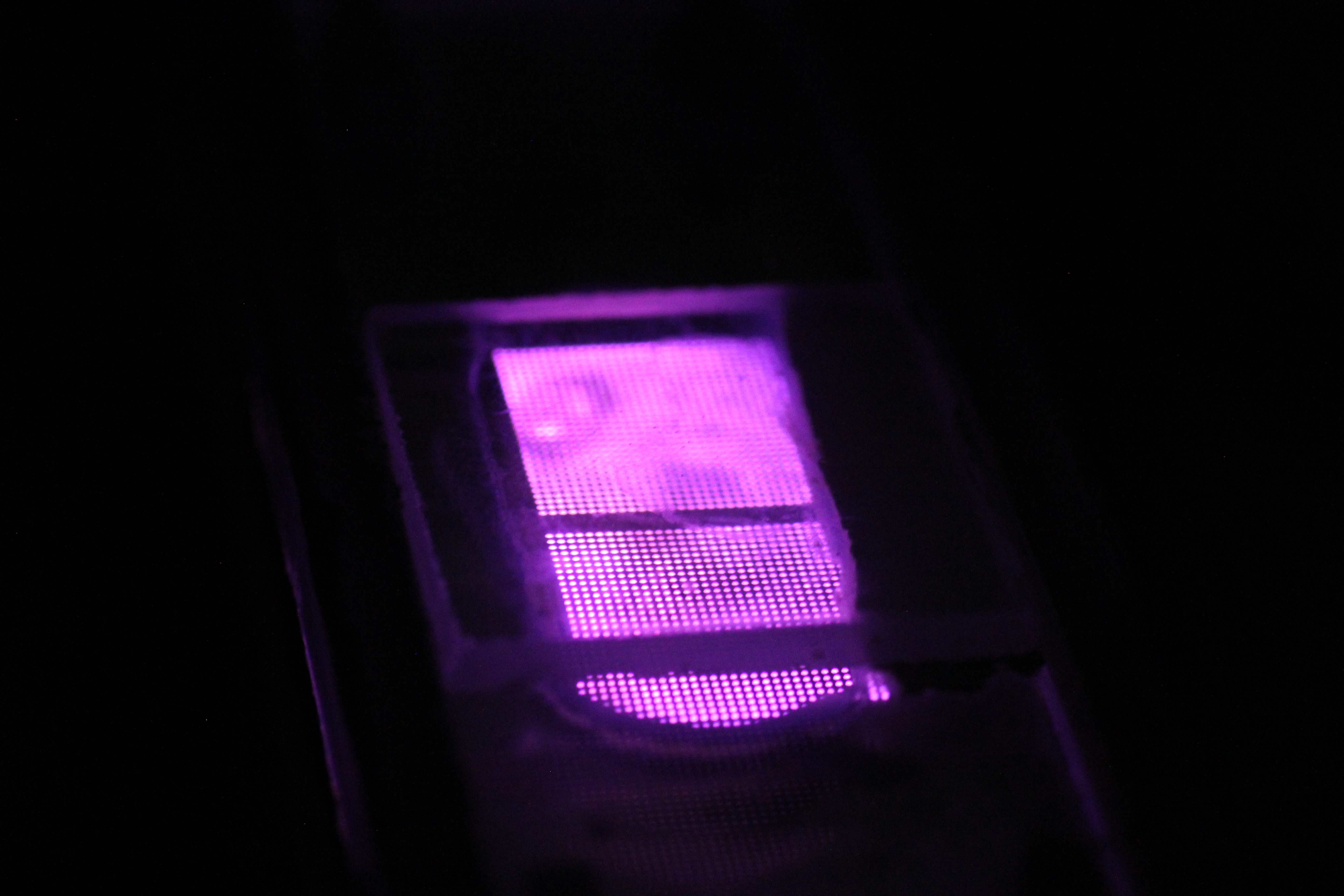
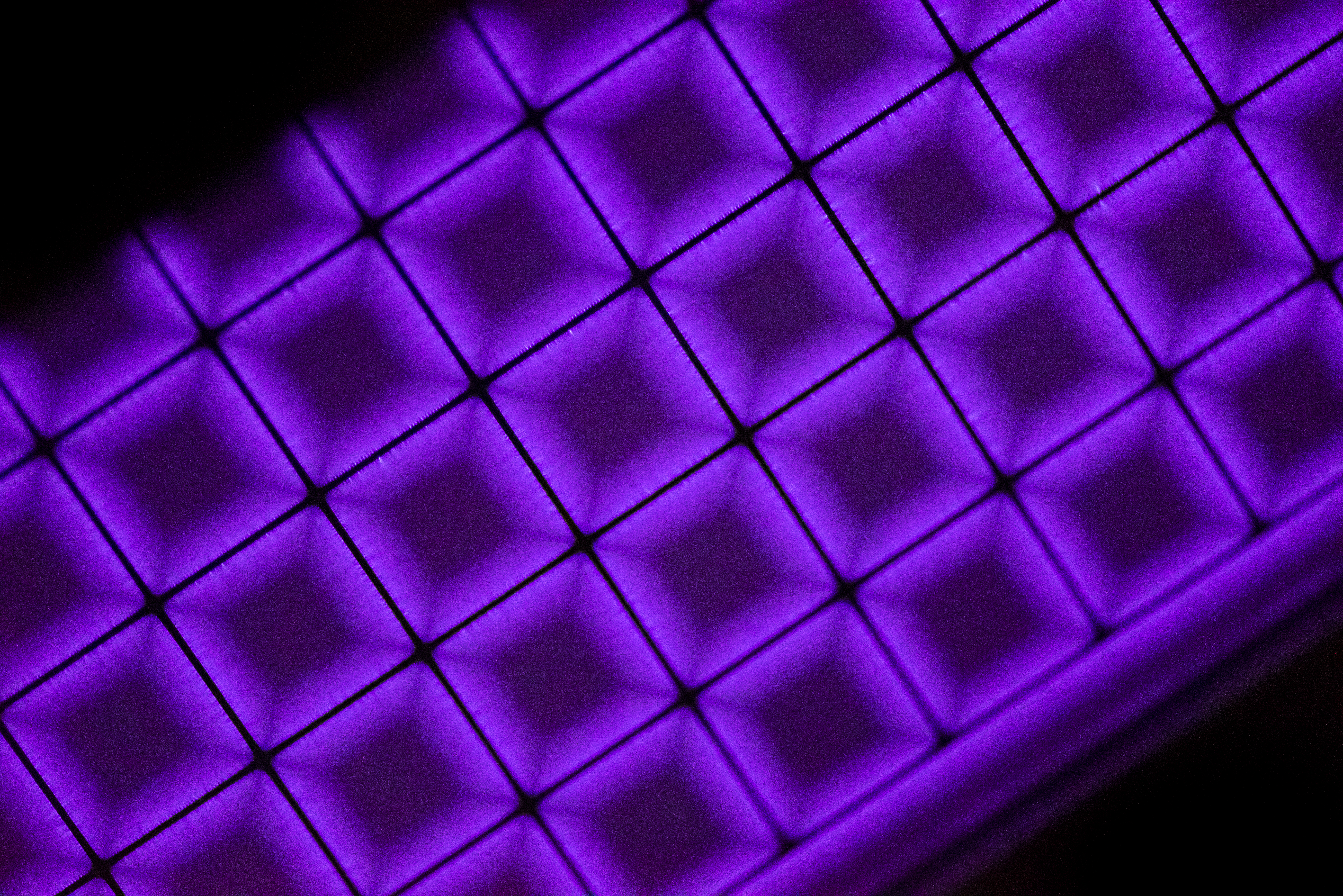
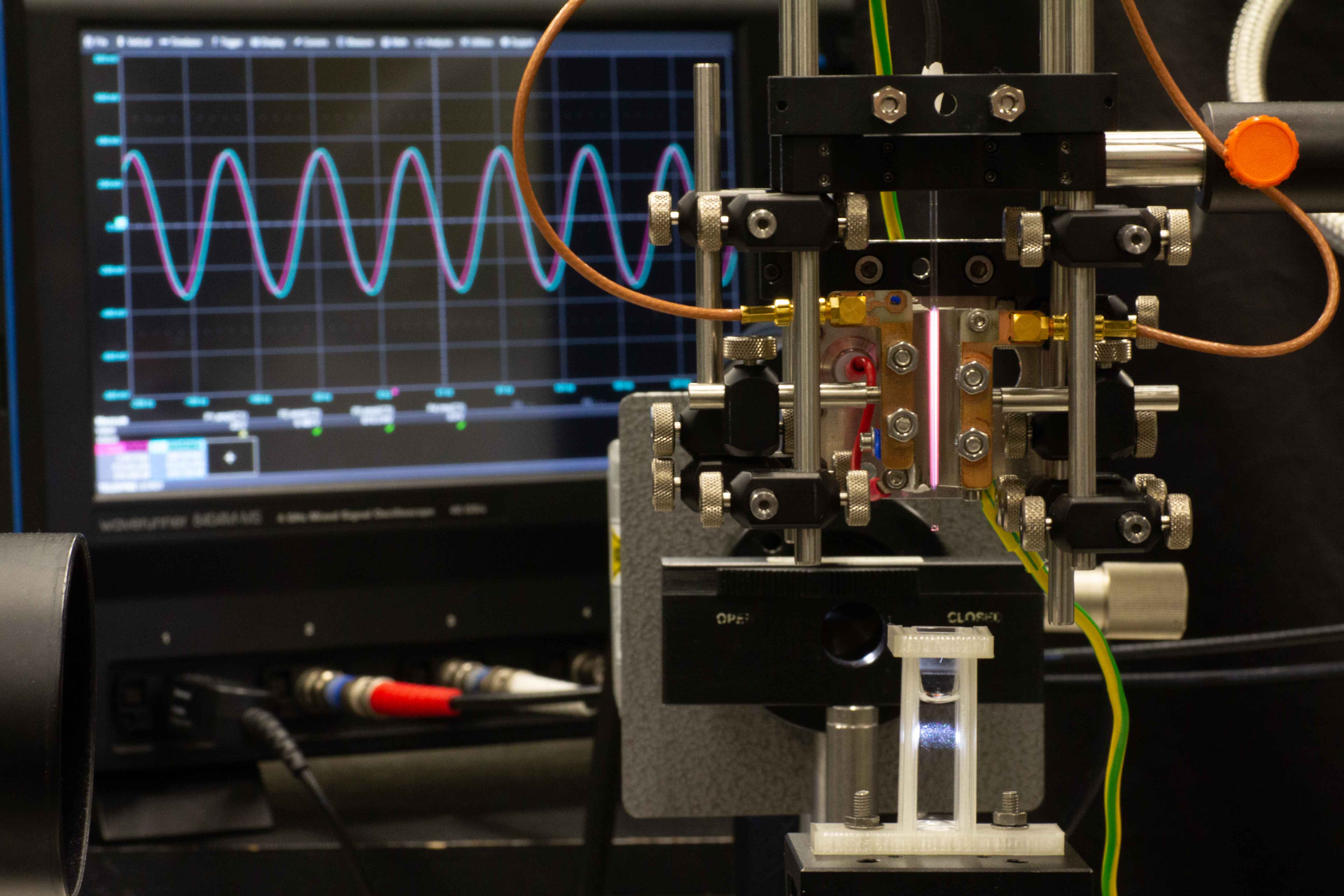
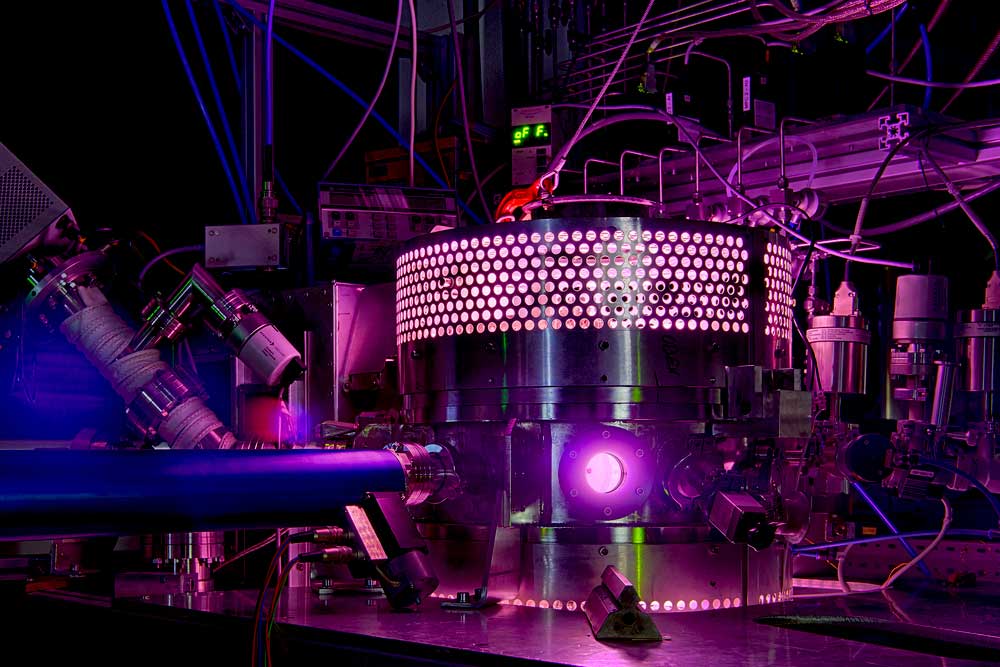
Prof. Thierry Belmonte and his people have visited from March 9th-12th, 2015 the group of Prof. Czarnetzki. Prof. Belmonte (Institut Jean Lamour, Nancy, France) is investigating pulsed discharges in liquids (liquid nitrogen, water, alcohols) for generation of variety of nanoparticles. Because the jitter of the discharge ignition time and the pulse-to-pulse differences among the formed microdischarges are large, it is very difficult to obtain reliable time-resolved information about discharge performance. An ideal diagnostics for such discharges is a use of streak camera. This camera has been provided to plasma researchers in Bochum by Germen Science Foundation (DFG) in frame of Research Unit "Physics of Microplasmas" (FOR 1123) and has been now successfully applied to the discharge of Prof. Belmonte with the assistance of AvH stipend Dr. Emile Carbone and PhD student Patrick Böhm. These activities are suported by a Leverhulme Trust lnternational Network Collaboration "Materials processing by atmospheric pressure plasmas for energy applications", initiated by Dr. Davide Mariotti (University of Ulster, Jordanstown, Northern Ireland) and includes also Jun.-Prof. Jan Benedikt (Ruhr-University Bochum) and Dr. Vladimir Švrček (National Inst. of Advanced Industrial Sci. and Techn. (AIST), Tsukuba, Japan).
- Details
TET
DR. ZOLTAN DONKO UND DR. PETER HARTMANN
From March 2 to 6, 2015, Dr. Zoltan Donko and Dr. Peter Hartmann from the Wigner Research Center for Physics of the Hungarian Academy of Sciences were guests at the Chair of Theoretical Electrical Engineering in Bochum. This provided many opportunities for intensive collaboration and exchange on the mechanism of electron heating in capacitively coupled low-temperature plasmas. The stay was funded by the German Research Foundation in the framework of the Collaborative Research Center Transregio 87.
- Details
EP2
PROF. GOTTLIEB OEHRLEIN
Prof. Gottlieb S. Oehrlein will spend part of his sabbatical with Prof. Achim von Keudell (Experimental Physics II) in April 2015. He is coming from the Department of Materials Science and Engineering, Institute for Research in Electronics and Applied Physics at the University of Maryland, USA and will give a talk on "Low temperature plasma research at the university of Maryland" on 4/20/2015 at 9:15 am (seminar room EP2, NB 5). In this context, he will also offer a small crash course on "A brief overview of materials processing using low temperature plasma" on 4/27/2015, 13:00-17:00.
- Details
TET
PROFESSOR ISMAIL RAFATOV
Assoc. Professor Ismail Rafatov from the Physics department of METU visited TET on 11 March 2015. He presented detailed seminars on the three different topics of his expertise: (1) Overview of the main modelling approaches (kinetic/particle, hybrid, and fluid) for gas discharge plasmas, (2) Modelling in COMSOL Multiphysics: "Equation based" model vs. COMSOL Plasma Module and (3) Chaos and pattern formation in low-temperature plasmas. In the seminars the basic modelling approaches for the gas discharge plasmas were outlined. Finally, a detailed analysis of spatial and temporal pattern formation in a dc driven "barrier" discharge system was presented. In the case of purely temporal oscillations, a transition of the system to chaos through period doubling bifurcations cascade could be identified. Beyond the initial transient regime, numerical solutions reproduced the Hopf or Turing-Hopf instability of the homogeneous stationary state. The agreement between 1d, 2d, and 3d numerical simulations and a linear stability analysis (within its range of validity) were also demonstrated. The visit was sponsored by the German Research Foundation in the frame of the transregional collaborative research centre TRR-87.
- Details
DPG Spring Meeting Plasma Physics & Short Time Physics 2015
Location: Audimax Foyer & Lecture Hall Center East (HZO), RUB
Date: 2-5.3.2015
http://bochum15.dpg-tagungen.de/index.html
- Details
EP2
CLAIRE DOUAT
Postdoc Dr. Claire Douat (Eindhoven University of Technology) besucht vom 5.-31. März 2015 Postdoktorand bei Simon Hübner (Experimentalphysik II).
Ihr RAPID-Projekt ER2 ist das "Design of dedicated equipment for time and spatially resolved measurements in atmospheric-pressure plasma". Das wissenschaftliche Ziel dieses europäischen Projekts ist die Entwicklung von reaktiven Plasmaquellen, die bei Atmosphärendruck betrieben werden und sich nicht im Gleichgewicht befinden (d.h. die Elektronentemperatur ist höher als die Temperatur der schweren Spezies). Der Betrieb bei Atmosphärendruck hat den Vorteil, dass kein Vakuumsystem erforderlich ist. Außerdem werden mehr Anwendungen möglich, wie z. B. die Plasmamedizin, da das Plasma direkt mit einem biologischen Ziel interagieren kann.
Für die Entwicklung dieses Projekts ist es notwendig, das Plasma zu diagnostizieren, um die im Plasma stattfindenden physikalischen und chemischen Phänomene zu verstehen und sie für zukünftige Anwendungen zu kontrollieren.
The project of the ER-2 position is to build a portable diagnostic, based on infrared absorption spectroscopy, to diagnose in terms of density of species, the different plasmas being used by the partners in the Network. A quantum cascade laser (QCL) is used as light source for this diagnostic.
Non-equilibrium plasma creates a multitude of species: positive and negative ions, electrons, and reactive atomic and molecular species, to just name a few. Some of the molecular species, such as CO, CO2, CH4 or NO, are able to absorb infrared light due to their molecular nature. It is similar to an optical filter: particular colors are not able to go through the plasma due to the presence of some molecules. As showed in Figure 1, the intensity of the light before absorption, I0, is higher than I. The Beer Lambert law formulates that by comparing these intensities, the density of the absorbing species can be known.
A quantum cascade laser is a laser able to emit a light in the mid-infrared. By changing the temperature of this laser, the main color of the laser can be tuned. However, this tuning has a limit range and to emit a laser with a wavelength outside this range, a different QCL must be used. In this project, the portable setup is composed of three different QCLs, which allows to measure the absolute density of several species, such as NO, CO and N2O.
- Details
MEETING: ELECTRICAL DISCHARGES WITH LIQUIDS FOR FUTURE APPLICATIONS
The 2nd Annual meeting of COST Action TD1208 was held in the wonderful city of Barcelona. The meeting took place at the School of Industrial Engineering of Barcelona (ETSEIB), part of the Technical University of Catalonia (UPC), from the 23rd to the 26th February 2015. The meeting was also open to non-members of the COST TD1208. Jun.-Prof. Jan Benedikt participated.
link to meeting website
- Details
EP5
PROF. DR. TOSHIAKI MAKABE
Prof. Dr. Toshiaki Makabe (Vice-President Keio University, Yokohama / Japan) will be a guest of Prof. Czarnetzki (Chair of Plasma and Atomic Physics) from 23-24 February.
On 24.2. he will give two lectures on: 1) Today and Tomorrow in Keio University, Japan and 2) Formulation of momentum-transfer scattering at an inelastic collision on electron transport.
The talk (or the two talks) will have been held at 10:15 am in NABF05/694. Interested parties are welcome to attend!
- Details
EP2
BEATA HERGELOVA
Beata Hergelova, RAPID fellow from projekt ESR-9, is visiting RUB from February 9th-20th, 2015. Her project ESR-9 is "Interaction of metal and semiconductor surfaces with atmospheric-pressure plasmas".
- Details
EP2
JEAN-PAUL HOANG-HOA-DUNG
Jean-Paul Hoang-Hoa-Dung, PhD student from CNRS PROMES Perpignan, is staying at Experimental Physics II (RUB) from February 2nd till March 31st, 2015. He is working for the Marie Curie - Initial Training Network Reactive Atmospheric Plasma processIng (RAPID).
- Details
Workshop "Cosmic Ray Anisotropies"
Physics Center, Bad Honnef, 26.01 - 30.01.2015
Organizer: Julia Tjus & Klaus Scherer
http://helio_cr.tp4.rub.de/CRA-2015/home.php