
- Details
09.04.2013 - QUANTITATIVE DETERMINATION OF OH RADICALS BY CAVITY RINGDOWN SPECTROSCOPY IN ATMOSPHERIC PRESSURE MICRO-PLASMAS FOR BIO-MEDICAL APPLICATIONS
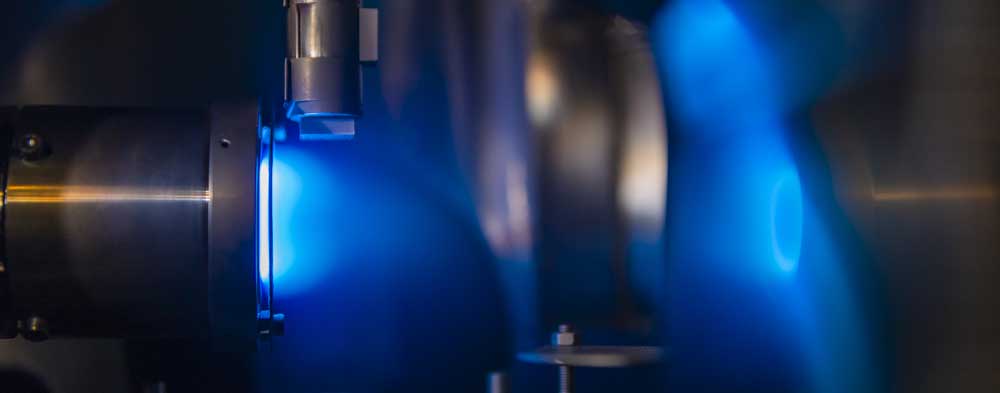
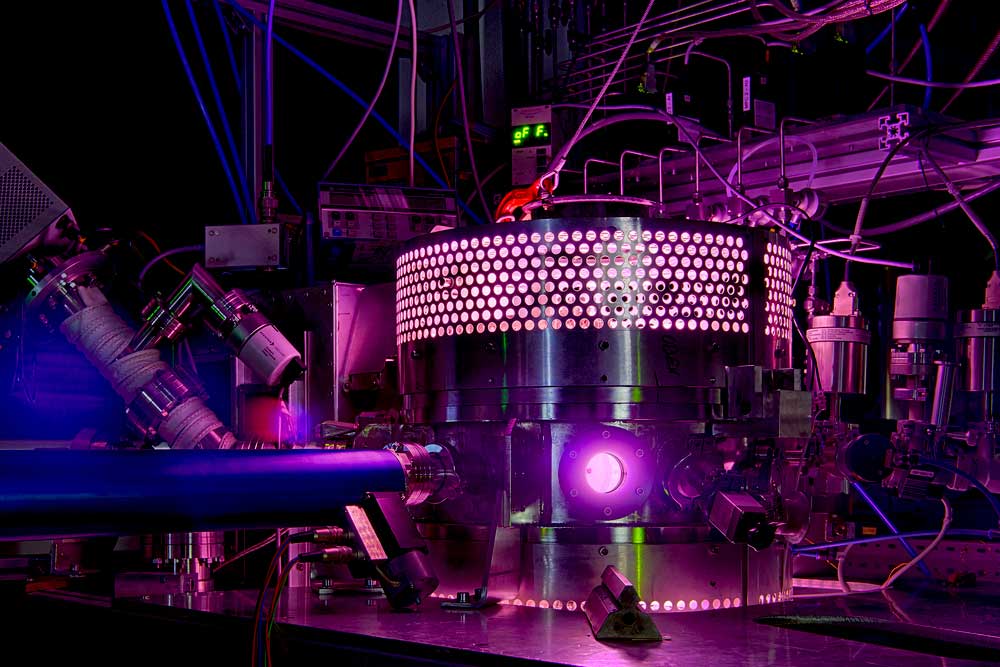
From March the 24rd to April 6th, 2013, the PhD-students Simon Schneider and Daniel Schröder from project C1 and A1, as well as Jun.-Prof. Dr. Jan Benedikt, all members of the DFG Research Unit FOR1123, visited the group of Prof. RNDr. Jaroslav Vlcek at the University of West Bohemia, Plzen, CZ.
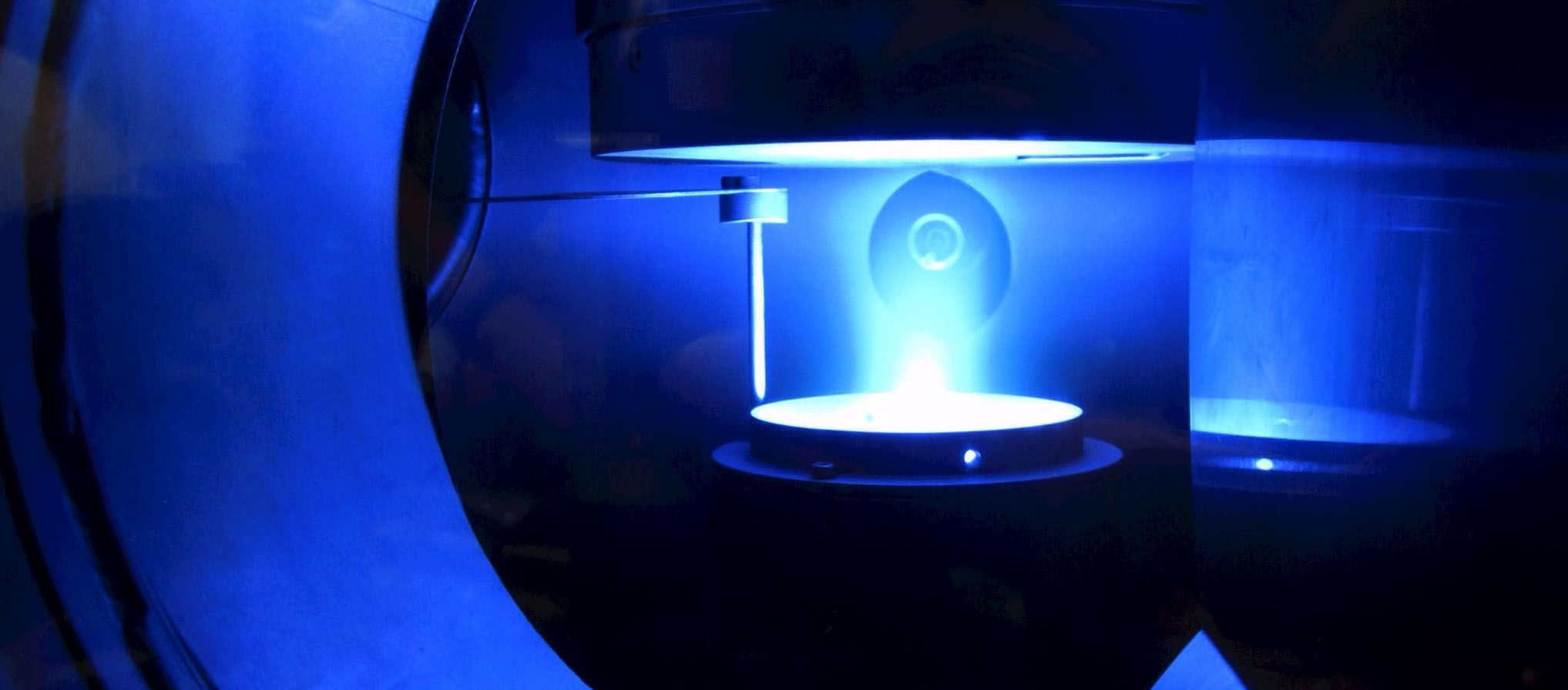
During this stay, absolute densities of OH radicals in the effluent of the micro-scaled atmospheric pressure plasma jet (µ-APPJ) have been measured in dependence of different concentrations of water impurities in the feed gas. This has been achieved by using a highly sensitive laser diagnostics called Cavity Ringdown Spectroscopy.
A common publication is in progress and a counter-visit is planned for next year.
- Details
EP2
PROF. DR. IGOR DENYSENKO
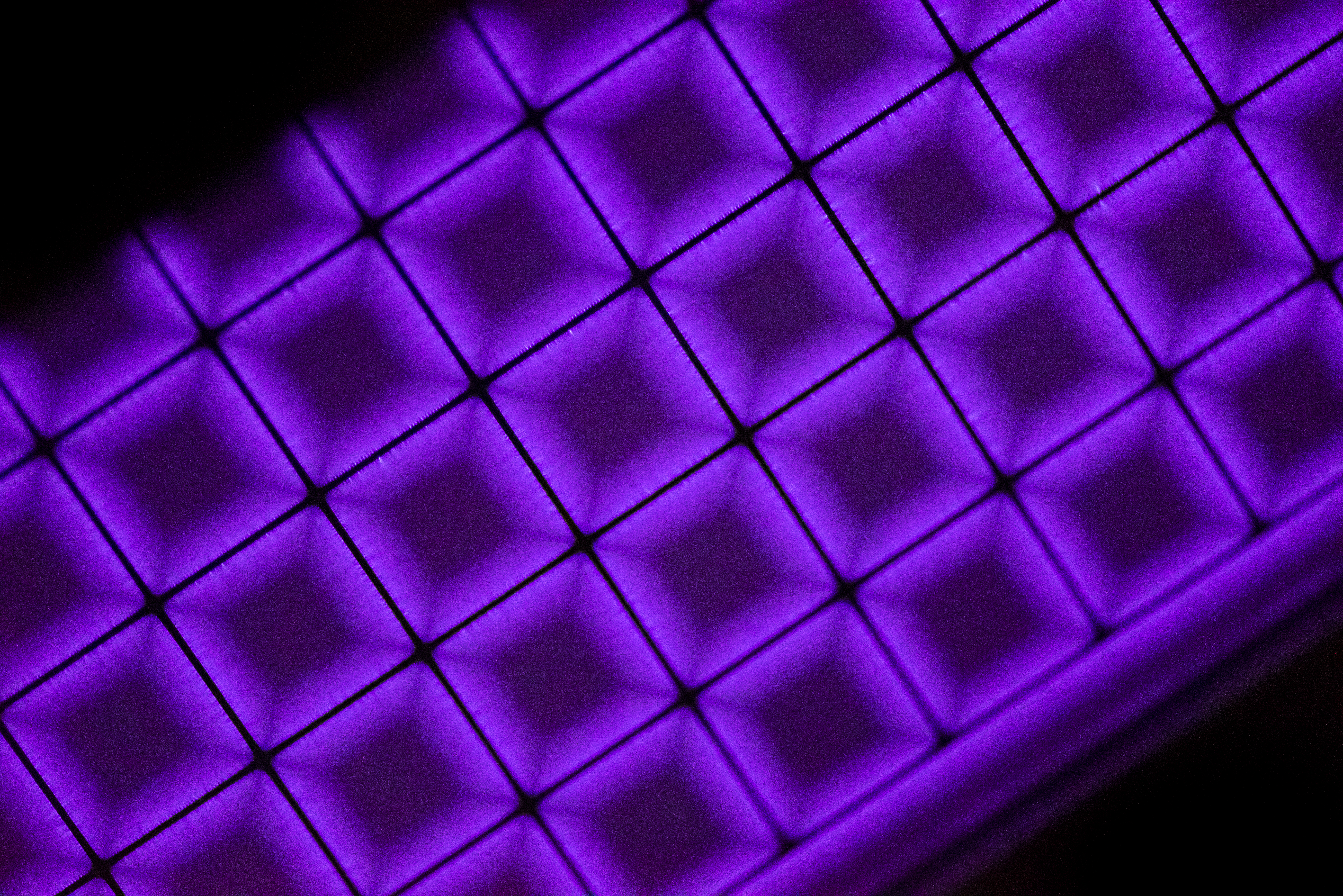
Professor Igor Denysenko of the School of Physics and Technology, V. N. Karazin Kharkiv National University, Ukraine, is a guest of Experimental Physik II from 2nd March to 15th April 2013. We continue our collaboration with Prof. Denysenko in the research field of dusty plasmas. Prof. Denysenko has developed a space-averaged global model to characterize the afterglow of pulsed argon plasmas which contain the large density of hydro-carbonaceous dust particles [1]. This global model is further developed in order to study the time evolution of the dust charge and the rate coefficient for electron collection by dust particles. During Prof. Denysenko’s stay in Bochum, we have prepared an article on this study. Furthermore, an article on a new non-invasive method for measurements of ion fluxes and ion densities in pulsed capacitively-coupled RF plasmas has been submitted. We kindly acknowledge the financial support of the Humbolt Foundation.
[1] I. Denysenko, I. Stefanovic, B. Sikimic, J. Winter, N.A. Azarenkov, and N. Sadeghi, J. Phys. D: Appl. Phys. 44 (2011) 205204
- Details
HERAEUS-SEMINAR "PLASMA AND RADIATION ENVIRONMENT IN ASTROSPHERES AND IMPLICATIONS FOR THE HABITABILITY OF EXTRASOLAR PLANETS"
The 527. Wilhelm und Else Heraeus-Seminar "Plasma and Radiation Environment in Astrospheres and Implications for the Habitability of Extrasolar Planets", took place from March 10th-15th, 2013 in the "Physikzentrum" of the German Physical Society (DPG) in Bad Honnef.
About 60 participants from 8 nations were discussing the conditions for habitability that are defined by the astrospheres, magnetospheres, and atmospheres surrounding extrasolar planets, including the question how signatures of life, so-called biomarkers, could be observed. The workshop brought together established experts on the various topics, young scientists as well as graduate students, and contributed to activities that will go well beyond the seminar week. The latter was supplemented by a Mini-Workshop within the framework of the ongoing collaboration between the Heliophysics group of the Ruhr-Universität Bochum, the Astroparticle Physics group at the University of Kiel, and the Centre for Space Research at the North-West University, Potchefstroom Campus, South Africa.
- Details
527th Wilhelm and Else Heraeus Seminar
Plasma and Radiation Environment in Astrospheres and Implications for the Habitability of Extrasolar Planets
10 - 15 March 2013, Physikzentrum Bad Honnef, Germany
Organization: PD Dr. Horst Fichtner & Dr. Klaus Scherer, Group Heliophysics, RUB
For this Heraeus seminar the emphasis is put on five key questions for the following topics:
Astrospheres: What is the spectrum of the cosmic ray flux outside an astrosphere and how is it transported through it?
Stellarspheres: How does the host star influence the exo-planetary environment by its electromagnetic radiation and energetic particle production?
Magnetospheres: What are the possible magnetosphere configurations of an exo-planet and what is its influence on the transport of energetic particles?
Atmospheres: How does the chemistry, the atmospheric dynamics and interaction with energetic particles influence the observability of an exo-planet?
Biospheres: Can possible signatures of life such as atmospheric ozone, methane be observed, and what is their possible contamination by energetic particle and radiation processes in the exo-planetary atmosphere?
http://helio_cr.tp4.rub.de/Heraeus/
- Details
Les Houches Winter school on plasma astrophysics
"The future of plasma astrophysics: Combining experiments, observations, simulations and theory"
February 25 - March 8 2013, Les Houches, France
(Organizers: F. Rincon, T. Passot, C. Forest, R. Grauer)
http://userpages.irap.omp.eu/~frincon/houches/
- Details
TP4
PROF. YURI LITVINENKO
Prof. Dr. Yuri Litvinenko from the University of Waikato, New Zealand, has been a guest at TP4/FOR1048 since 11.2.2013 and will give a talk on "A Numerical Study of Diffusive Cosmic-Ray Transport with Adiabatic Focusing" on Thursday, 14.02.2013, starting at 11.00 in NB 7/67. Interested parties are welcome to attend!
ABSTRACT: Focused particle transport in a nonuniform large-scale magnetic field is investigated numerically in the case of isotropic pitch-angle scattering. Evolving particle density profiles and distribution moments are computed from solutions of a system of stochastic differential equivalent to the original Fokker-Planck equation for the particle distribution. Conflicting analytical predictions for the transport coefficients in the diffusion limit, independently calculated by Beeck & Wibberenz and Shalchi, are compared with the numerical results. The reasons for the discrepancies among the analytical and numerical treatments, as well as the general limitations of the diffusion model, are discussed. The telegraph equation, derived in a higher-order expansion of the particle distribution function is shown to describe the particle transport much more accurately than the diffusion model, especially ahead of a moving density pulse.
- Details
EP2
VICTOR AMARY
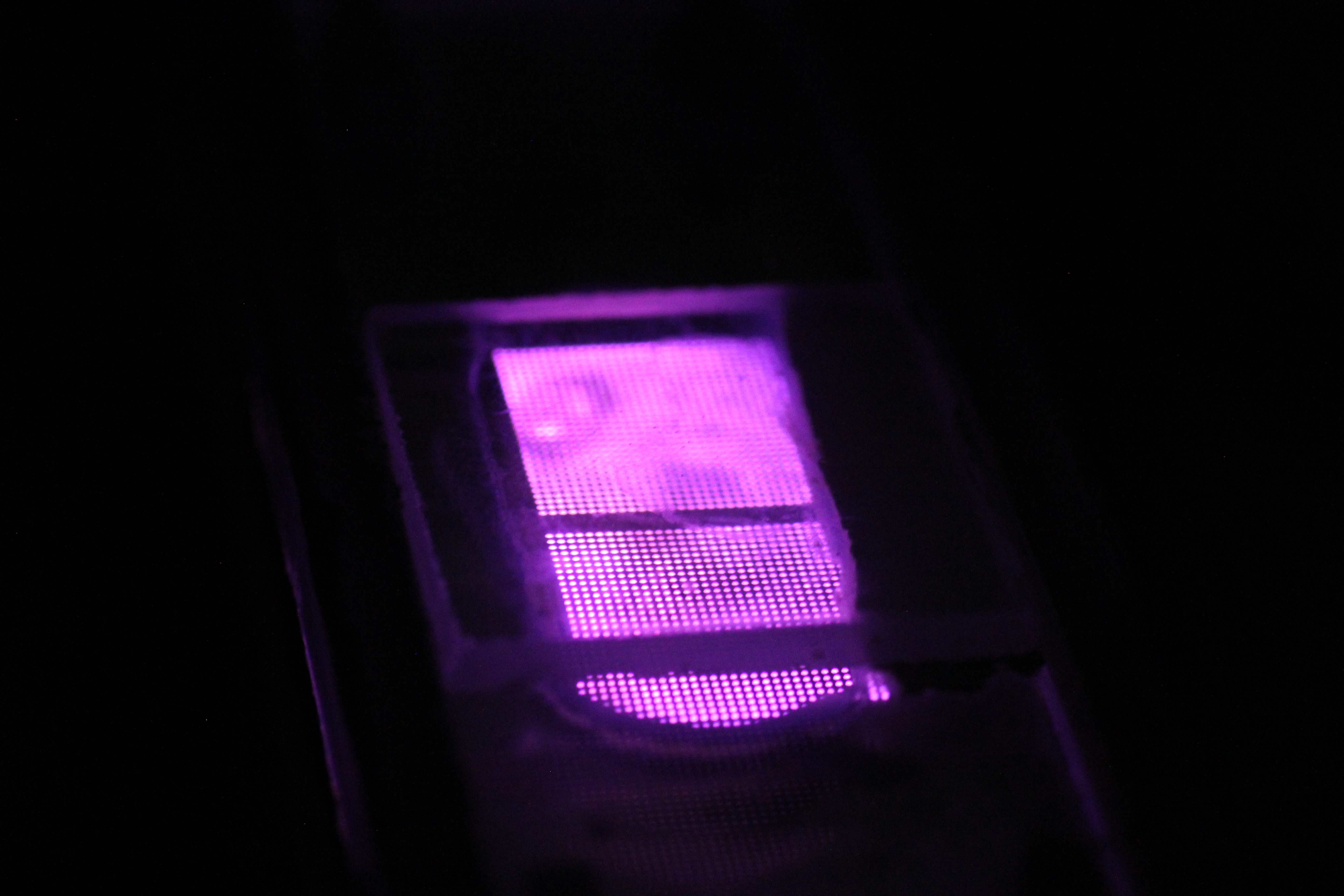
From February the 4th to March the 31th Master-Student Victor Amary from the Groupe de Recherches sur l'Energétique des Milieux Ionisés (GREMI) of the Université d'Orléans has successfully completed his internship at the Institute of Application Oriented Plasma Physics (EP2).
In the course of his stay he participated in working in the Project A1 of the DFG Research Unit FOR1123 around Phd-Student Daniel Schröder and Dr. Schulz-von der Gathen. He focusses his investigations on diverse further developments concerning the Micro-Plasma Jet (µ-APPJ). By the variation of the material and the widths of the electrodes, he managed to ignite the µ-APPJ with an argon feed gas flow combined with the spectroscopic characterisation of this new operation mode of the jet device.
Victor Amary is now continuing his Master Studies at the Ruhr-Universität Bochum in course of the Erasmus Programme. The team of Project A1thanks Mr. Amary for his successful participation and wishes him all the best for his future career.
- Details
H.E.S.S. MEETING 2013
From April 22-26, 2013, the Chair of Theoretical Space and Astrophysics will host the Spring Meeting of the H.E.S.S. Collaboration. It has been held at the RUB Event Center.
- Details
28.01.2013 - STEFAN SPIEKERMEIER AT BILKENT UNIVERSITY IN ANKARA
From January 13th till 27th, 2013 Stefan Spiekermeier visited the Group of Prof. Ömer Ilday at Bilkent University, Ankara, Turkey. Dr. Marc Böke, his supervisor, visited as well from January 22nd till 24th, 2013.
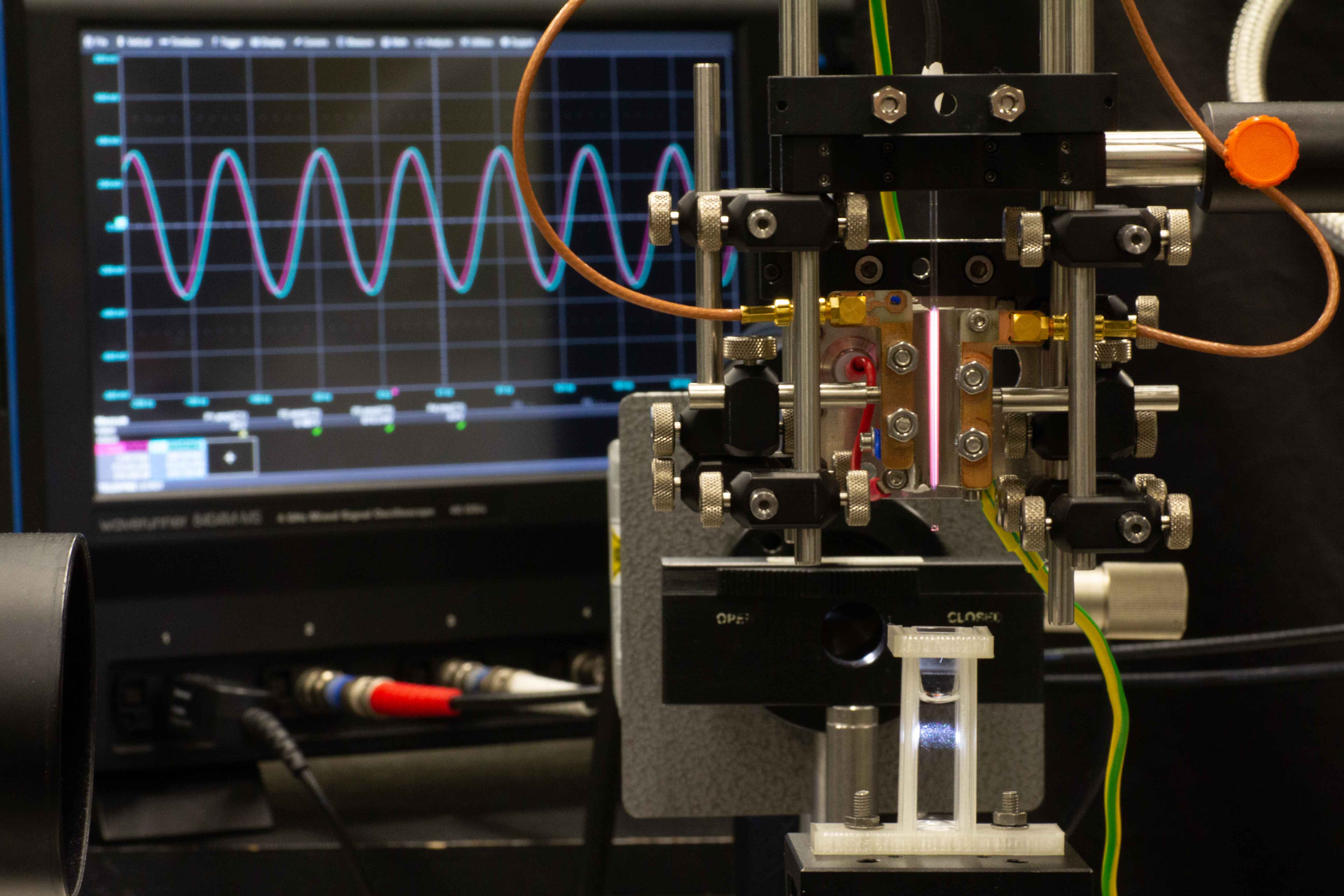
His group developed the fiber-laser-system that is used for laser assisted plasma breakdown and phase resolved absorption spectroscopy at RUB. During the stay, a new temperature stabilized oscillator for the laser has been tested. Further improvements for the laser have been discussed. Aside from that, an attempt to ignite a plasma inside a hollow-core-PCF-fiber has been made.
- Details
21.01.2013 - DR. ILIJA STEFANOVIĆ AT KHARKIV NATIONAL UNIVERSITY IN UKRAINE
Dr. Ilija Stefanović visited the Kharkiv National University. From January 21st to February the 1st, 2013 Dr. Ilija Stefanović visited Prof. Igor Denysenko from Department of Physics and Technology of Kharkiv National University, Ukraine, and gave the lecture on «Diagnostics and Modeling of RF Plasmas with Nanoparticles». He visited low temperature plasma laboratories and got acquainted with application oriented research on the Department, especially with bipolar ion source. Beside of that, he was invited to Ukrainian National Institute for Physics and Technology, where he gave a lecture with the title «Stability and Similarity Laws of DC Microdischarges». The Ukrainian colleagues presented him their newest results of their different activities, including the basic research on two stelerators and application oriented, low temperature plasma reactors. Dr. Stefanović's travel to Kharkiv has been supported by Alexander von Humboldt-Stiftung in the frame of institutional partnership between Institut für Experimentalphysik II and Department of Physics and Technology, V. N. Karazin Kharkiv National University.
- Details
TP1
PROF. DR. GERMASCHEWSKI & PROF. DR. TOBIAS SCHÄFER
On Monday, January 14, 2013, Prof. Dr. Germaschewski (2:15 p.m.) and Prof. Dr. Tobias Schäfer (3:00 p.m.) will give talks in room NB 7/165. Prof. Germaschewski from the Department of Physics / Space Science Center at the University of New Hampshire, Durham, USA will talk about "Exploiting the power of heterogeneous computing for kinetic simulations of plasmas", Prof. Schäfer from the Department of Mathematics at CUNY, USA will talk about "Geometric minimum action method for stochastic Burger's equation". The lectures will take place in the framework of FOR 1048 "Instabilities, Turbulence and Transport in Cosmic Magnetic Fields". Interested persons are welcome to attend.