
- Details
RUDOLF SEELIGER PREIS 2017 AN PROF. DR. JÖRG WINTER
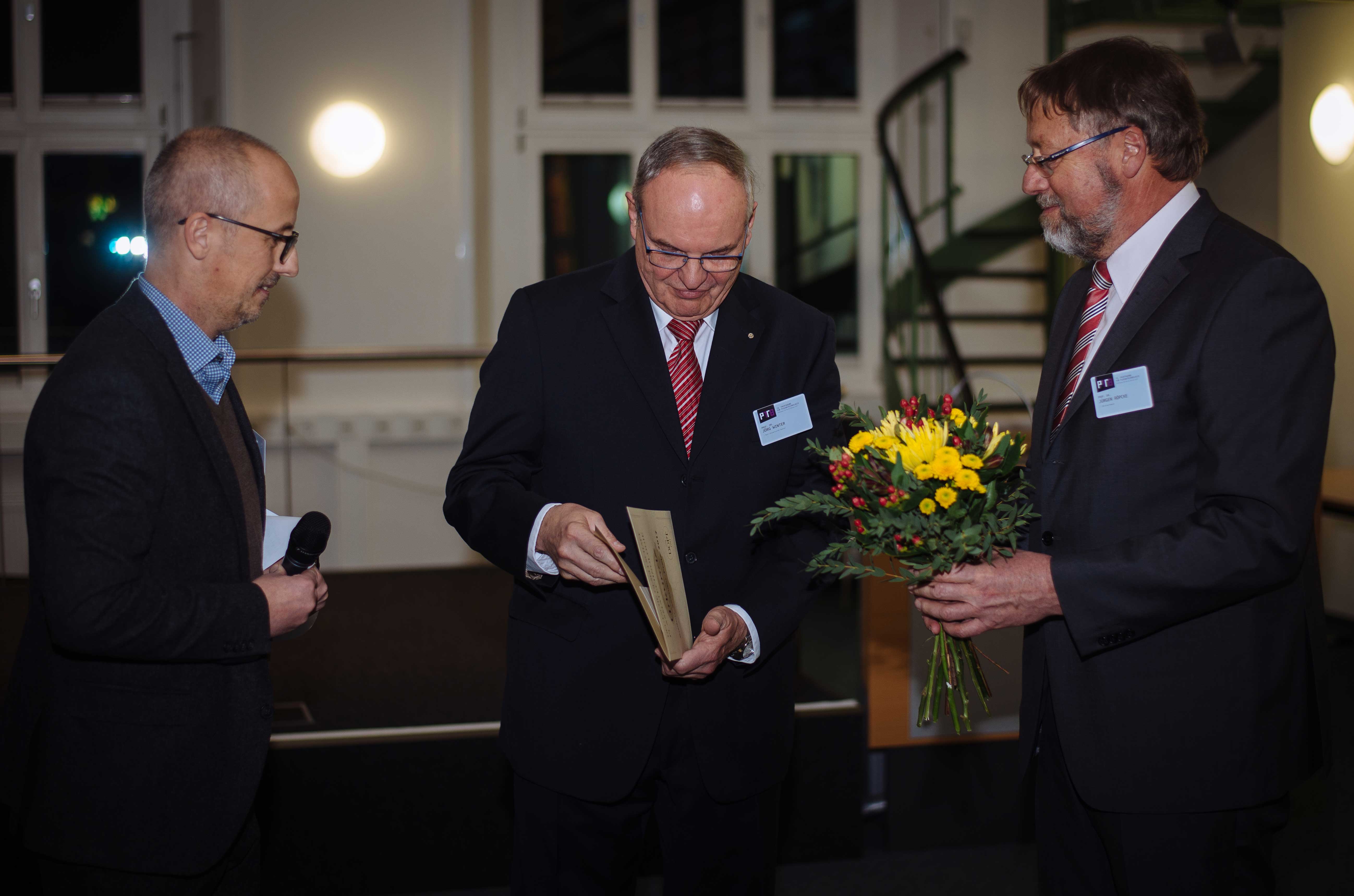 The Rudolf-Seeliger price 2017 of the German society for plasma technology was hand over to Prof. Dr. Jörg Winter during the annual conference PT18 for his scientific contribution in the field of micro plasma physics on February 22nd, 2017.
The laudation was held by Thomas Mussenbrock who honored especially his work in the field of physics of micro plasmas. Prof. Jörg Winter was a pioneer in this field who saw the potential of micro plasmas long before other scientists started to work in this field.
- Details
JUN.-PROF. DR.-Ing. KATHARINA STAPELMANN: "PLASMA - THE NEW ALL-PURPOSE WAFFER IN MEDICINE".
As part of the lecture series "Everything Plasma!", Jun.-Prof. Dr. Katharina Stapelmann will give a lecture on "Plasma - the new all-purpose weapon in medicine?" on December 1, 2016. The lecture will take place on floor 1 in BlueSquare starting at 6:00 pm.
Plasma medicine is a comparably young field of research. One method, cold atmospheric pressure plasma, has proven particularly effective in healing chronic wounds. Plasma has many different mechanisms of action. For example, it not only helps to reduce the bacterial load in the wound, but also stimulates the body's own immune system, promotes blood circulation and thus supports wound healing on many levels. However, plasma medicine is being researched worldwide for a wide variety of applications, for example as a new cancer therapy or as a painless alternative to root canal treatment in dentistry. Plasma can also be used to sterilize medical instruments or surfaces in hospitals and is also reliably effective against so-called "hospital germs".
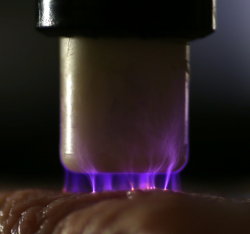
The lecture will give an overview of current research topics in plasma medicine with a focus on wound healing. We will trace the mechanisms of action and find out why plasma is so effective and can be used in so many different ways. At the end there will be an opportunity to look at a plasma for wound healing - touching allowed!
- Details
EP2
14.11.2016 - Dr. KATEŘINA HERYNKOVÁ
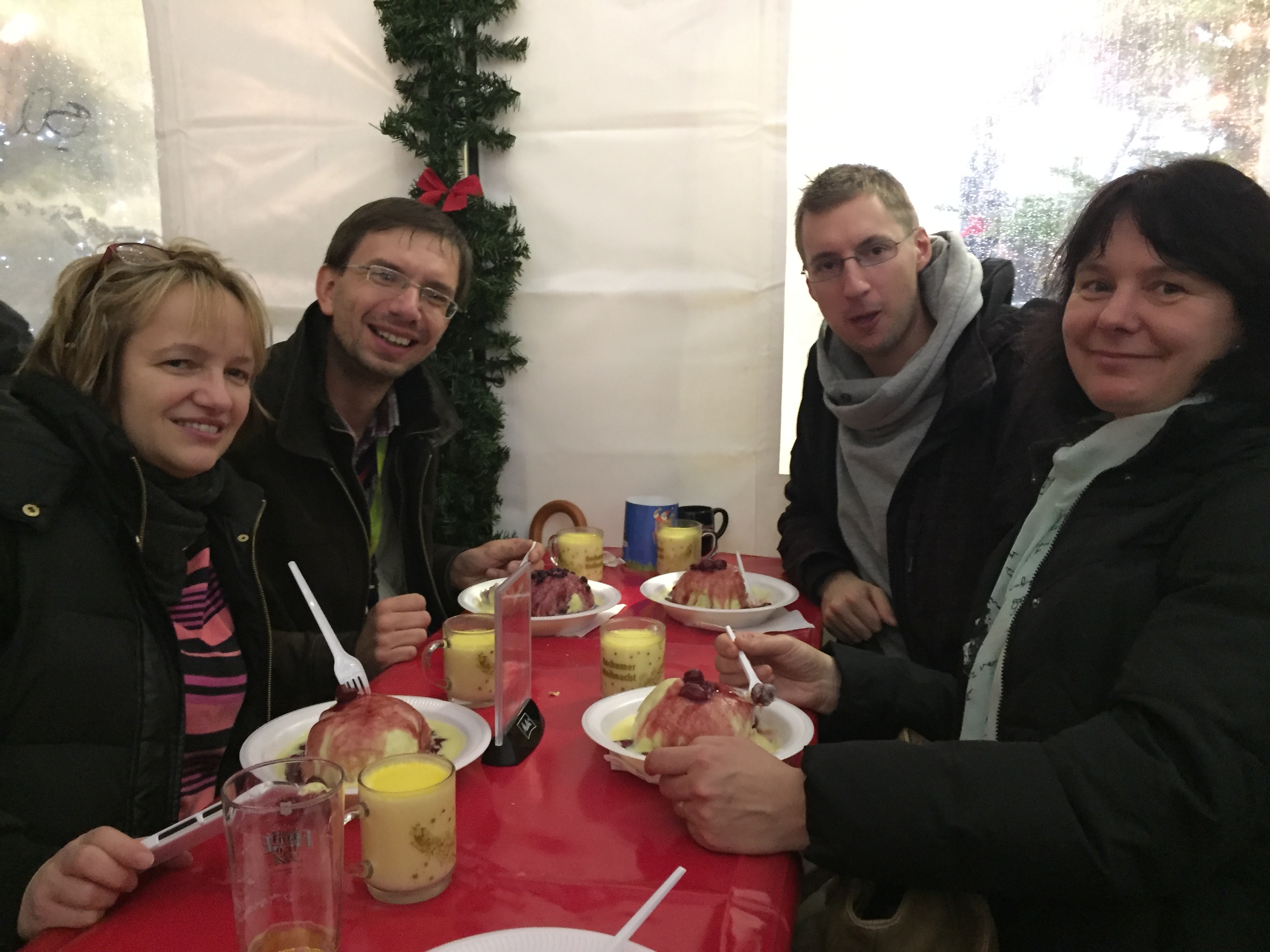
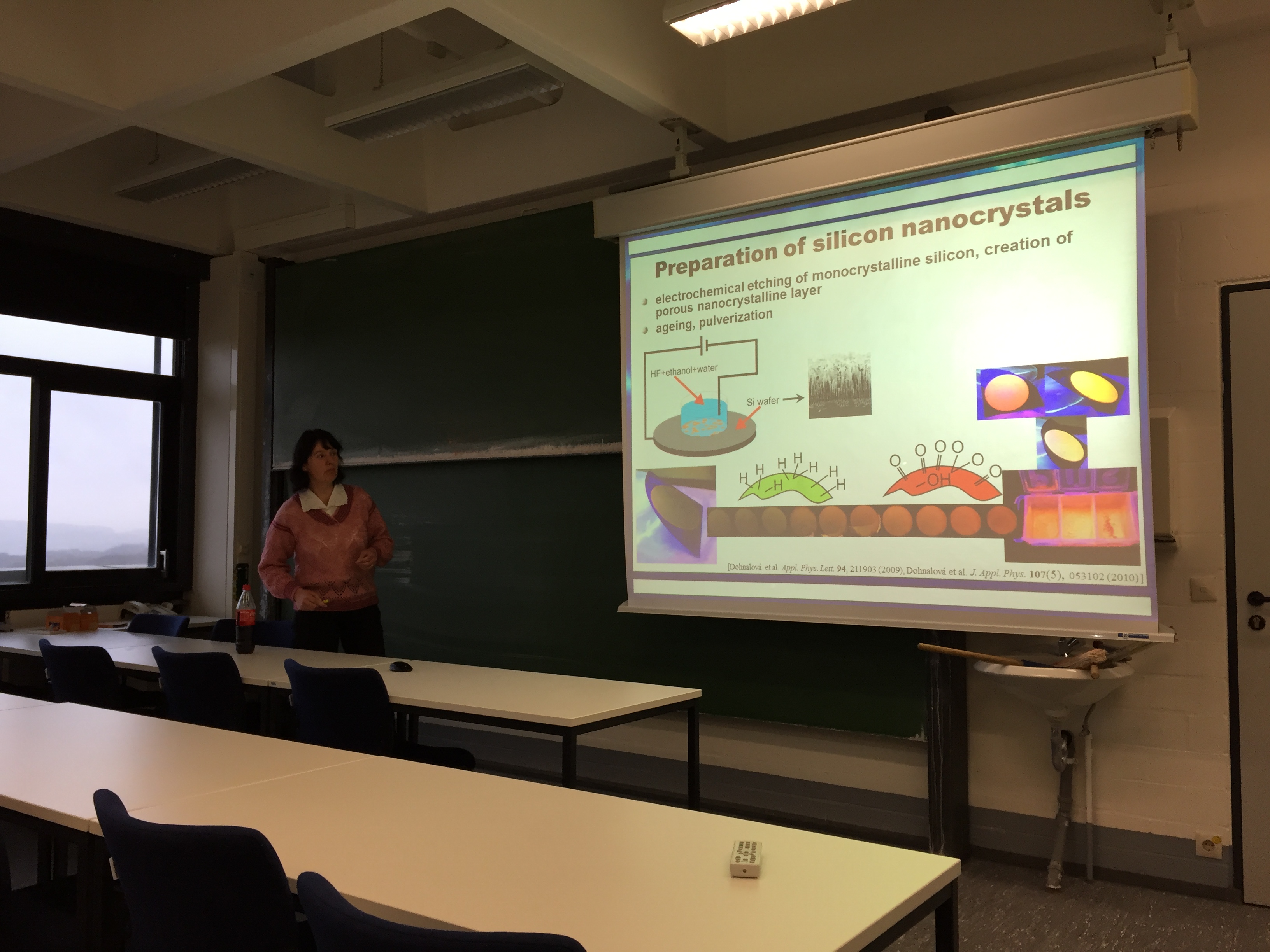 Dr. Kateřina Herynková, Martin Müller und Dr. Ondrej E. Cibulka vom Department of Thin Films and Nanostructures, Institute of Physics, Academy of Sciences of the Czech Republic, Prague, Czech Republic waren zu Gast bei Jun.-Prof. Dr. Jan Benedikt. Im Rahmen dessen hielt Dr. Kateřina Herynková einen Vortrag über "Luminescing silicon nanoparticles for optoelectronic and biological applications". Außerdem wurde der Bochumer Weihnachtsmarkt besucht.
Abstract: Silicon nanoparticles have potential application in so-called all-silicon optoelectronics or in biology as luminescent markers or optically controlled drug delivery. Silicon nanocrystals having 2-3 nm in size show visible luminescence due to the quantum confinement effect and organic (methyl) capping of the nanoparticles can enhance luminescence efficiency up to 20%. The native indirect bandgap of the silicon is in tensile-strained nanoparticles switched to direct bandgap behavior. By modifying the preparation conditions of the highly porous silicon we obtain hydrophilic nanoclusters suitable for biological research, however, the nanoparticles tend to agglomerate. Study of their toxicity showed better viability of the cells in comparison with diamond nanocrystals.
- Details
Prof. Bernhard Unterberg "Hotter than the Sun"
On November 3, Prof. Bernhard Unterberg will give a lecture on "Hotter than the Sun" as part of the "All Plasma" lecture series. This will take place at Blue Square starting at 18:00. Interested parties are welcome to attend!
A new primary energy source modeled on our sun - to realize this vision, plasmas with extreme temperatures of 150 million degrees Celsius must be confined. This is already possible today with the help of magnetic fields, and now fusion researchers are building the fusion experiment "ITER" (lat. the way), in which 500 MW of fusion power will be generated for the first time.
In this lecture, we will explain the physical principles of fusion in magnetically confined high-temperature plasmas and what challenges have to be overcome on the way to a fusion reactor - especially with regard to the wall materials, which have to withstand the highest stresses in the fusion reactor.
- Details
Astronomy
Prof. Dr. Judith Irwin 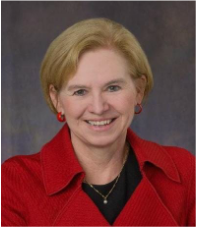
From September to November 2016, Prof. Dr. Judith Irwin from Queen's University in Kingston, Canada visited the Chair of Astronomy of Prof. Dettmar. In the context of this, she gave a colloquium lecture.
Title: Radio Circular Polarization in the Nuclei of Nearby Galaxies
Abstract: Circular polarization is technically difficult to measure in astrophysics, due to the weakness of the signal. Very few sources have had confirmed circularly polarized signals, but the scientific payoff can be significant, especially the potential insight that such observations provide on the nature of Active Galactic Nuclei.
This talk will review observations of circular polarization in nearby systems, as well as present some new results from CHANG-ES (Continuum Halos in Nearby Galaxies -- an EVLA Survey). A close look at circular polarization is especially timely now that we are approaching the era of the Square Kilometre Array.
link to Kolloquium RUB Physik
Both collaborate in the CHANG-ES project, which has the following scientific objective:
Magnetic fields are spread over the whole universe. Galaxies as well as galaxy groups and cluster exhibit magnetic fields. In Fig. 1 the magnetic field lines of an edge-on spiral galaxy is shown. In Fig. 2 the same is shown for a face-on spiral galaxy. One of the main fields of interest of modern astrophysics is to find the origin and mechanisms of the observed cosmic magnetic fields on galactic and cosmological scales.
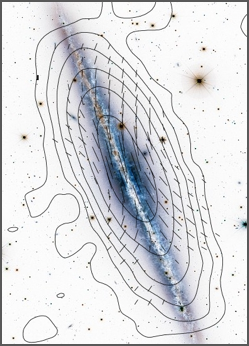
Fig. 1, Left: Edge-on spiral galaxy NGC 891 (total and polarized intensity), observed with the Effelsberg telescope at 8 GHz (3.6 cm wavelength) Optical background image: CFHT/Coelum
© M. Krause (MPIfR Bonn)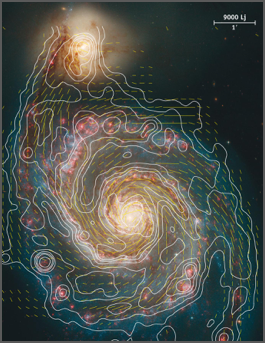
Fig. 2, Right: Spiral galaxy M51 (total and polarized intensity), combined from data observed with the interferometric radio telescope Very Large Array (VLA, USA) and the Effelsberg 100m single-dish radio telescope (Germany) at 5 GHz (6 cm wavelength), Optical background image: Hubble Space Telescope (Hubble Heritage Team)
© A. Fletcher (MPIfR Bonn)
The Galaxy survey “Continuum HAlos in Nearby Galaxies – an Evla Survey (CHANG-ES)“ was observed at the Expanded - Very Large Array (E-VLA Radiotelescope), New Mexico, USA (Fig. 3). It contains a galaxy sample of significant size over a variety of angular spatial scales, which will help to address fundamental questions regarding radio halos and magnetic fields in spiral galaxies. The PI of this Project is our VIP of the Ruhr-University Bochum Judith Irwin.
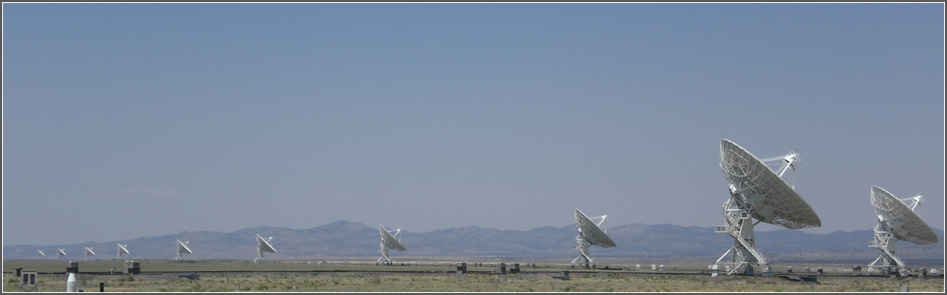
Fig. 3: Expanded - Very Large Array (E-VLA Radiotelescope), New Mexico, USA.
©Yelena Stein
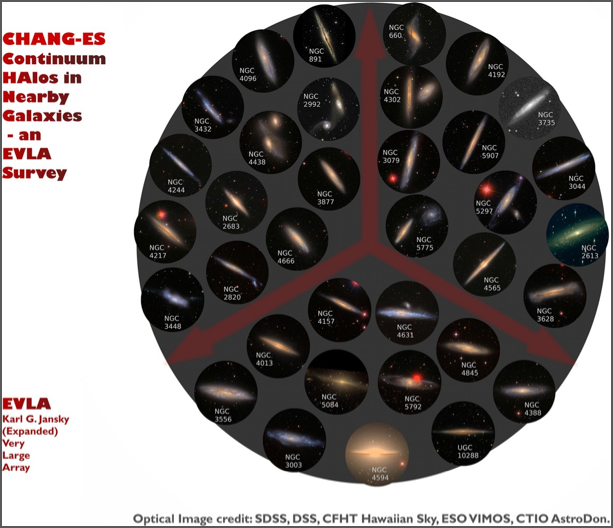
The CHANG-ES sample of 35 galaxies are all edge-on spiral galaxies with a certain luminosity and size. In Fig. 4 you see all the galaxies.
 The galaxies were observed at the two low frequencies, 1.5 GHz (20 cm wavelength) and 6 GHz (6 cm wavelength) in the radio regime to get a low contribution of thermal emission and to carry out a technique called “Faraday rotation analyses” in galaxy disks and halos. CHANG-ES can also exploit the wide bandwidths that are provided by the EVLA. These wide bandwidths permit enormous improvements in continuum sensitivity. In addition, the wide bands provide a wealth of spectral information that will be unique to this survey. Moreover, CHANG-ES is the first survey of edge-on galaxies for which all polarization products will be obtained, providing important information on halo magnetic fields (Irwin et al. 2012).
Fig. 4 CHANG-ES logo.
- Details
Gaseous Electronics Conference (GEC)
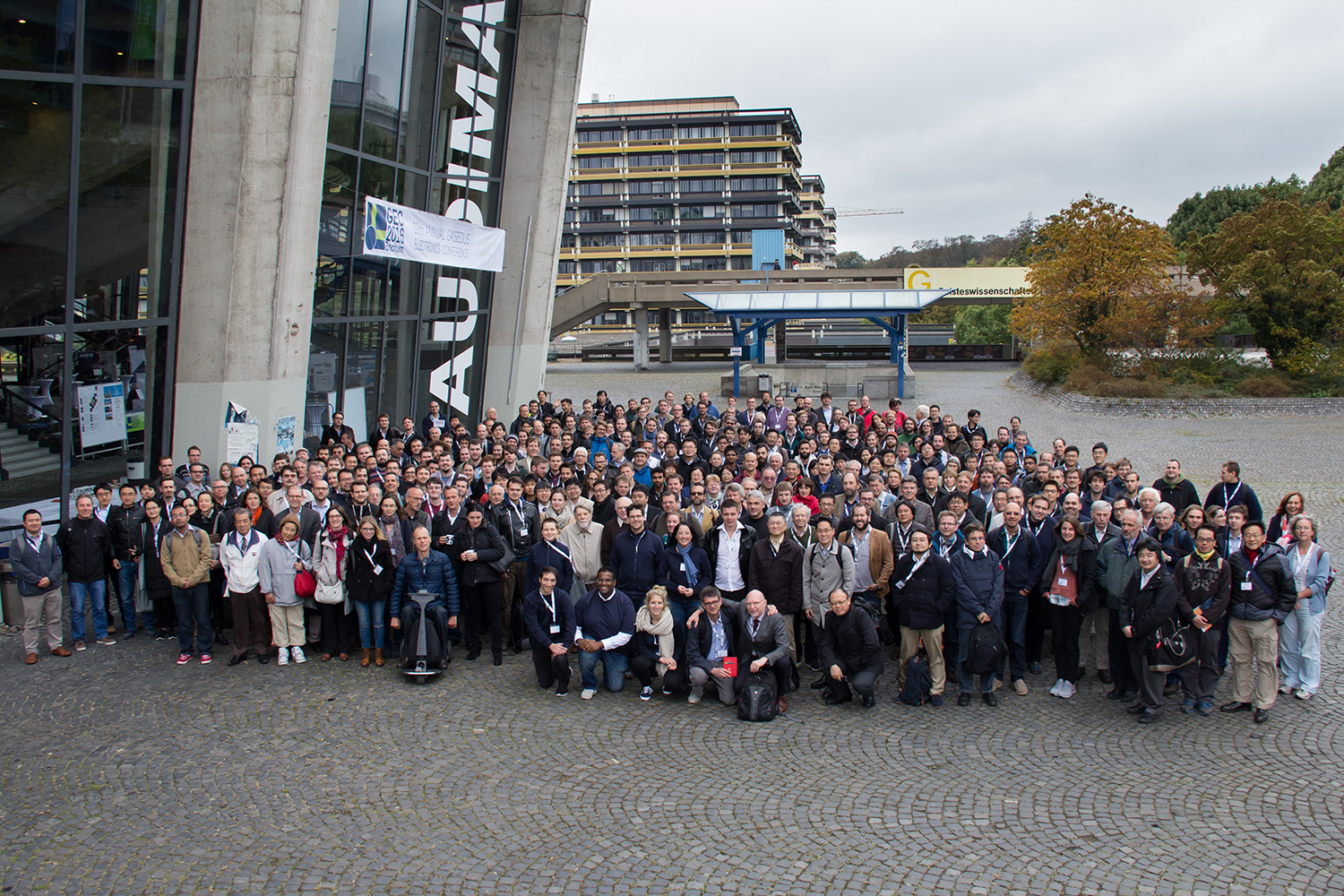
It is one of the world's largest plasma conferences and is normally only held in convention centers or hotels. In Bochum, the Gaseous Electronics Conference will be held for the first time on the campus of a university.
The organizers of this year's Gaseous Electronics Conference, or GEC for short, are expecting around 450 international participants. The 69th edition, which will take place from October 10 to 14, 2016 at the Ruhr University Bochum (RUB), is thus expected to be the largest GEC ever.
The logistical and planning challenge includes, for example, 64 invited and 222 submitted talks, 262 poster contributions, a conference dinner at the Henrichshütte in Hattingen, a show at the Planetarium Bochum, laboratory tours at the RUB, a concert at the Audimax, a visit to the Botanical Garden, and an accompanying industrial exhibition with more than 20 companies.
Not in the USA for the fourth time only.
The organizer is the American Physical Society (APS). The meeting is organized locally by the Research Department "Plasmas with Complex Interactions" at RUB, in particular by Prof. Dr. Uwe Czarnetzki and his team.
"For only the fourth time in its nearly 70-year history, the meeting has not been held in the USA," explains Czarnetzki. "And for the first time ever, the meeting venue is the campus of a university. We are proud to have brought the GEC to Bochum." Last year, experts in plasma physics and technology met at the Honolulu Convention Center in Hawaii.
Plasmas are extremely versatile
In terms of content, the focus is on so-called low-temperature plasmas and the associated atomic and molecular physics. These are partially ionized - electrically charged - gases. They are characterized by high conductivity. They also exhibit unique chemistry and interaction with surfaces.
Their applications are broad, ranging from lighting to cancer treatment. Low-temperature plasmas can be used to coat, activate and clean surfaces, produce gas lasers and semiconductor devices, or disinfect medical equipment. They are also used in wound healing.
Broad and well positioned: Plasma research in Bochum
"Research and development are often interdisciplinary and primarily encompass physics, electrical engineering, chemistry - and more recently biology and medicine," like this. The Bochum Research Department Plasmas with Complex Interactions is correspondingly broadly positioned.
"The RUB has long been one of the world's strongest research universities in the field of plasma physics and technology and therefore enjoys an excellent international reputation," says Czarnetzki. Scientists from various faculties cooperate across disciplines in the Plasma research focus: a total of 23 chairs and research groups with more than 300 employees from physics and astronomy, electrical engineering, chemistry, biology and mechanical engineering.
- Details
Prof. Dr.-Ing. Awakowicz "Plasma, the all-rounder"
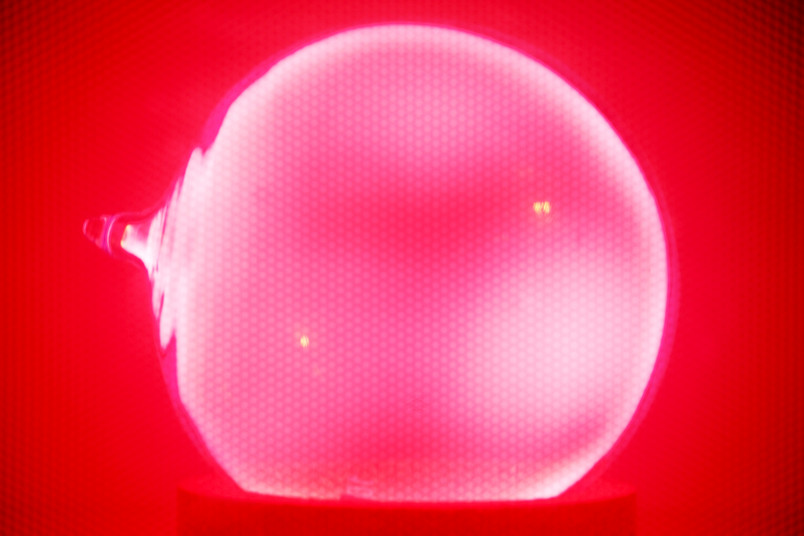
PD Dr. Horst Fichtner could introduce in his lecture different plasmas of the solar system and for phenomena like "the solar fire", the hundred thousand degrees hot solar wind, to which interplanetary space probes and astronauts are exposed, detailed and vrständliche explanations supply. Also the energetic cosmic rays he conveyed with an ease in his execution.
He was able to explain why the understanding of these plasmas is important for fundamental physics as well as for the prediction of the so-called space weather and space climate.
- Details
TP4
PROF. DR. YURI LITVINENKO
From December 01, 2016 to February 28, 2017, Prof. Dr. Yuri Litvinenko will again be a VIP guest of PD Dr. Horst Fichtner.
Subject: Theoretical models of cosmic-ray acceleration and transport
Abstract: The generation and transport of energetic cosmic-ray particles (electrons, protons, ions) is among the most important problems in modern astrophysics. When the particles propagate in the cosmos, they often interact with turbulent magnetic fields. The resulting complicated evolution of the cosmic-ray distribution can be mathematically described as a simpler diffusive process. The diffusion approximation and its generalisations have been employed for studying the generation and propagation of energetic particles in many astrophysical situations: in the atmosphere of the Sun, interplanetary space, and the interstellar medium.
The VIP grant will support a systematic investigation of unresolved issues of particle transport in astrophysics, with a focus on analytical and numerical modelling of diffusive particle transport. The areas of particular interest are as follows. (1) Rigorous derivation of the diffusion and telegraph approximations for cosmic-ray transport modelling, which quantifies their accuracy. (2) Development of new analytical and numerical methods for solving the equations governing the transport of solar and galactic cosmic rays. (3) Critical examination of possible mechanisms of fractional particle diffusion in the cosmos.
Foto: Copyright University of Waikato
- Details
TP4
PROF. DR. SEAN OUGHTON
From September 19 to October 14, 2016, Prof. Dr. Sean Oughton from the Department of Mathematics of The University of Waikato, New Zealand, will be a guest of PD Dr. Horst Fichtner to prepare a joint DFG project.
link to Sean Oughton
- Details
Plasma Day 2016
This year's Plasma Day (26/09/2016) had been held in the premises of the Event Center of the Ruhr-University Bochum. Members of the Research Department Plasmas with Complex Interactions presented their main research topics and the latest results.
At the beginning Prof. Dr. Achim von Keudell (Experimental Physics II, RUB) welcomed the Verwsammelten (schedule). Björn Offerhaus & Friederike Kogelheide gave a talk on "Comparison of a surface DBD with a volume DBD", then Dr. Ante Hecimovic presented on "High Power Impulse Magnetron Sputtering".
A preview of upcoming research intentions was given by Prof. Dr. Achim von Keudell on the outline of the Collaborative Research Center 1316 "Transient atmospheric plasmas from plasmas to liquids to solids".
Marco Krewing, who spoke on "Selected examples of plasmas in biology and medicine", worked in an application-oriented way. Kerstin Weis spoke about "Plasmas in Astrophysics", followed by Jan Trieschmann with the contribution "Simulation Methods for Technological Plasmas".
The experienced scientists Prof. Dr. Czarnetzki swoei Dr. Tsanko V. Tsankov spoke about "Ion transport in plasmas and the kinetic Bohm criterion".
From theoretical physics there were three lectures by Dr. Klaus Scherer on "Astrospheres", Dr. Jens Kleimann on "Ruhr Astroparticle and Plasma Physics Center" and Prof. Dr. Grauer on "Multiscale/Multiphysics simulations of collisionless plasmas".
The day was concluded with a contribution by Prof. Dr. Dirk Reiser on "Theoretical Plasma Physics at FZJ IEK-4, Tokamaks, Stellarators and Linear Devices".
- Details
100 Ruhr researchers study cosmic rays
They are constantly raining down on us from space: cosmic ray particles. Scientists from the Ruhr University Alliance are founding a center to study them.
Cosmic rays are the link between the research areas of the working groups that have joined forces in the Ruhr Astroparticle and Plasma Physics Center, or RAPP Center for short. Around 100 researchers will celebrate the opening of the facility in the Ruhr University Alliance on September 21, starting at 7 p.m. in the Bochum Planetarium. An inaugural conference will have been held at RUB on September 22 and 23.
Questions from dark matter to planet formation
At the RAPP Center, researchers ranging from students to professors will work at the intersection of astrophysics, plasma physics and particle physics. They will ask questions like: What is dark matter, anyway? Where does cosmic radiation come from? Why is there more matter than antimatter? Which interactions of elementary particles are relevant and how can they be studied? What is the role of magnetic fields in the universe? How does planet formation work?
Funding
The RAPP Center is funded by the Mercator Research Center Ruhr (Mercur) with about 330,000 euros.