
- Details
CRC 1316 at IWM 13 in Busan, South Korea
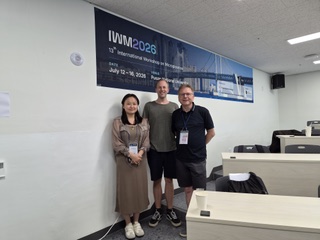 Three researchers from CRC 1316 participated in the "13th International Workshop on Microstructures (IWM 13)“, held from July 12-16 in Busan, South Korea, where they presented their latest research and exchanged ideas with leading scientists from around the world.
All three researchers contributed to the scientific program with oral presentations. Their talks covered a broad range of topics, including plasma electrolytic oxidation (Lars Schücke), catalytic conversion of n-butane (Yue Cheng), and micro-plasma arrays for gas conversion (Marc Böke).
A particular highlight of the conference was the invited talk given by Marc Böke. Participation in IWM 13 provided an excellent opportunity to strengthen international collaborations, discuss recent advances in microplasma and microstructure research, and showcase the diverse research activities of CRC 1316.
- Details
IceCube Spring Collaboration Meeting 2026 in Bochum
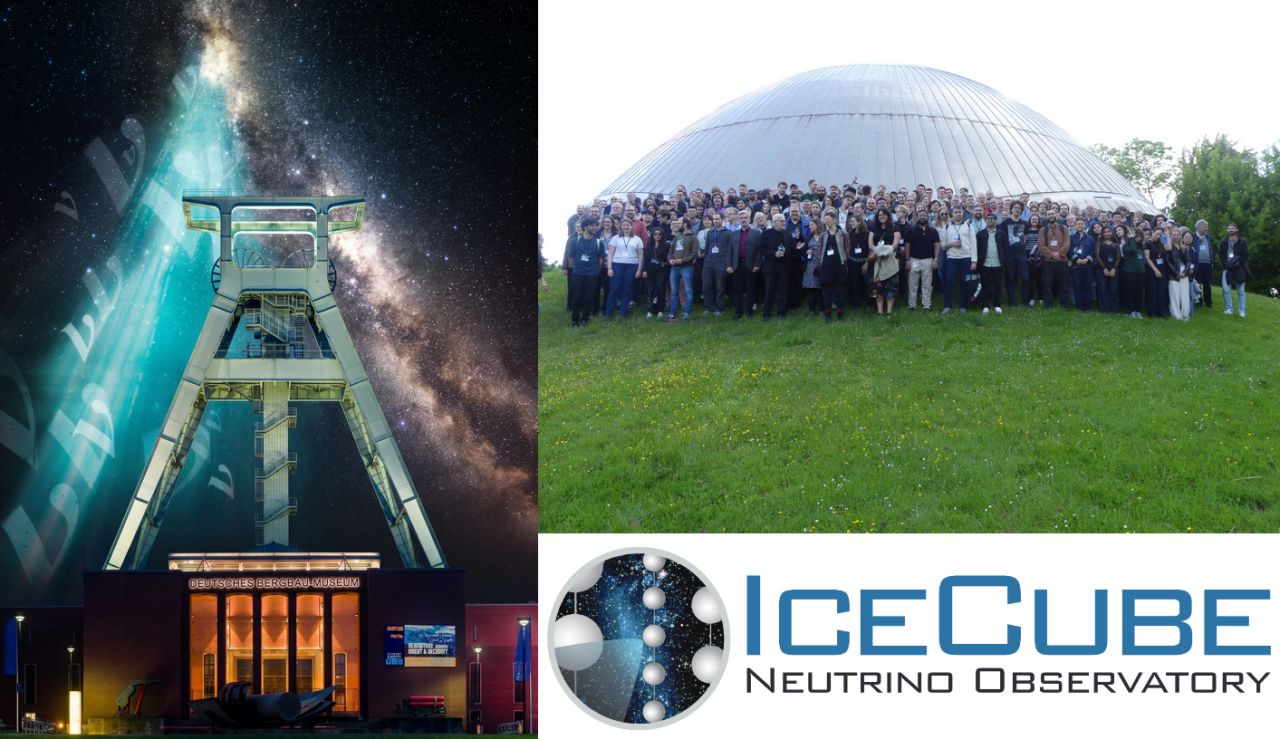 From May 18–22, the Ruhr area is hosting this year’s IceCube Spring Collaboration Meeting. Organized by SFB 1491 “Cosmic Interacting Matters”, the event brings together more than 200 scientists from around the world at the Deutsches Bergbau-Museum Bochum. The meeting provides a platform for researchers to present and discuss recent progress across the many fields represented within the IceCube Collaboration — from neutrino astronomy to astroparticle physics. The Plasma Science Hub supports this event.
International meetings like these are invaluable opportunities to strengthen collaborations, exchange ideas, and connect in person with colleagues who are often working on opposite sides of the globe.
📸 Image: Artistic impression of neutrinos pouring down on the Deutsches Bergbau-Museum Bochum Logo credit: IceCube Collaboration
- Details
SFB1491 receives funding for another four years
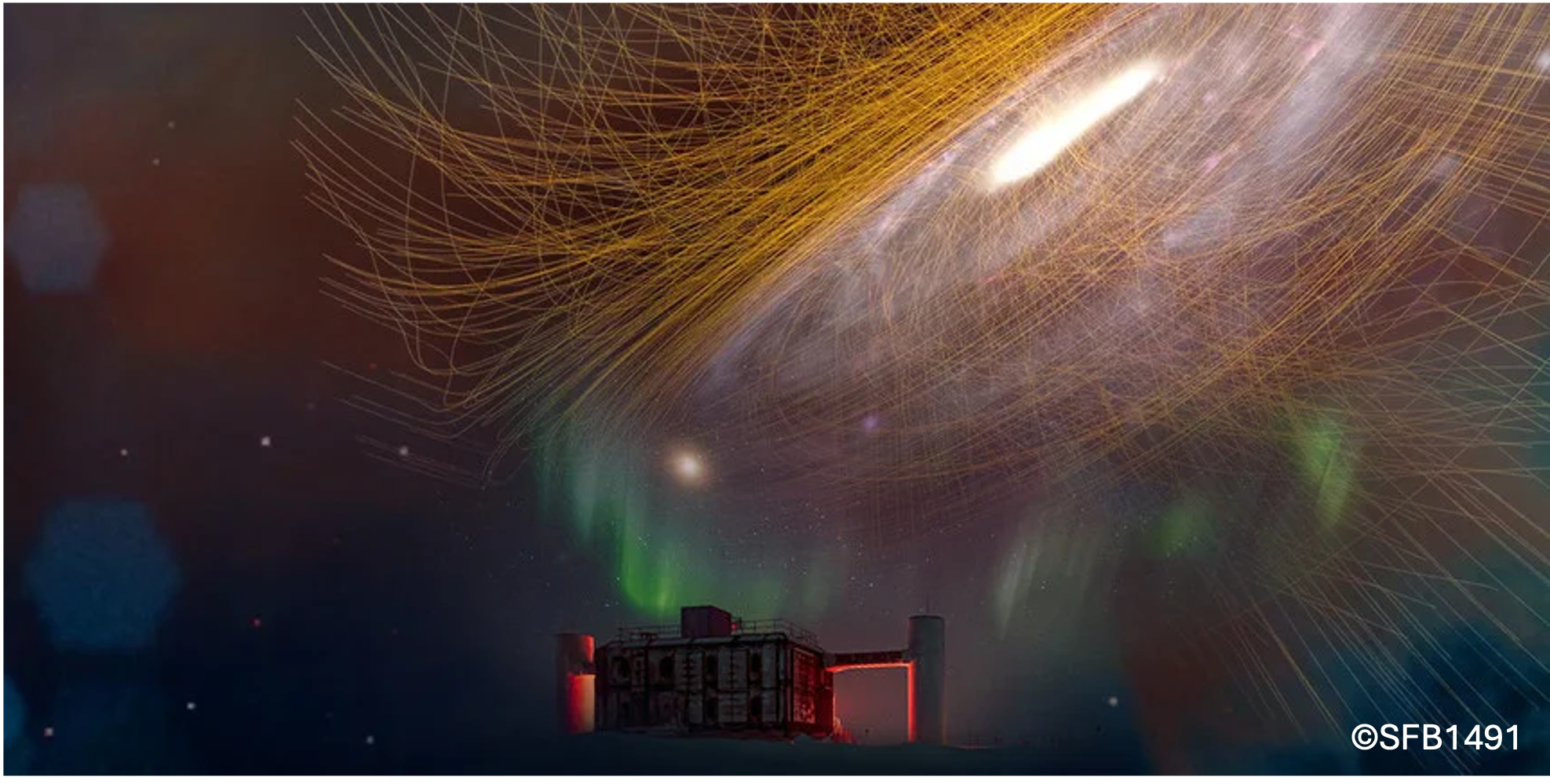 The Collaborative Research Centre 1491 “Cosmic Interacting Matter” will receive funding for another four years. The German Research Foundation has approved the continued funding of the CRC, led by spokesperson Prof. Dr. Julia Tjus at Ruhr University Bochum, from 1 July 2026. There is a lot going on in the sky: stars are born and die, charged particles, radiation and neutrinos collide and influence one another. The Collaborative Research Centre has been investigating these interactions in the Universe since 2022. The team studies previously unexplored connections between different energies and particles in space: from cosmic rays, gamma rays, and neutrinos to turbulent electromagnetic fields.
Uncovering mechanisms of origin
“While our understanding of the fundamental building blocks of matter is already well established, the specific interactions responsible for multimessenger emissions from galaxies across a broad range of energies and particle species remain an important research question,” says Julia Tjus.
By combining investigations of cosmic radiation with experiments in particle physics, the team of the Collaborative Research Centre aims to uncover the mechanisms by which high-energy particles, gamma rays and neutrinos are produced. Computer-aided modelling is also intended to illuminate the interplay between charged particles and turbulent electromagnetic fields at the plasma level.
Questions about dark matter
Since visible matter also makes up only one fifth of the Universe, understanding the nature of dark matter remains one of the greatest challenges of modern science. “Four years ago, we began working on a unified description of interacting cosmic matter and brought together scientists from the fields of particle, plasma and astrophysics to address three central scientific questions,” says Julia Tjus:
- What interactions exist between magnetized, turbulent astrophysical plasmas and cosmic radiation, and what conclusions can be drawn from them about the origin of cosmic rays?
- How do precision measurements of particle interactions help us understand the astrophysical signatures of cosmic radiation?
- What connections exist between the signatures of visible and dark matter?
In the first funding phase, global structures were developed and tested using individual examples. In the second funding phase, the focus will be on the quantification and systematization of these framework concepts. “Building on the results of the past four years, we will further expand our approach to developing methods for bridging boundaries in order to answer our fundamental questions in the coming years,” says Julia Tjus.
- Details
5th Workshop on FAIR data in plasma science
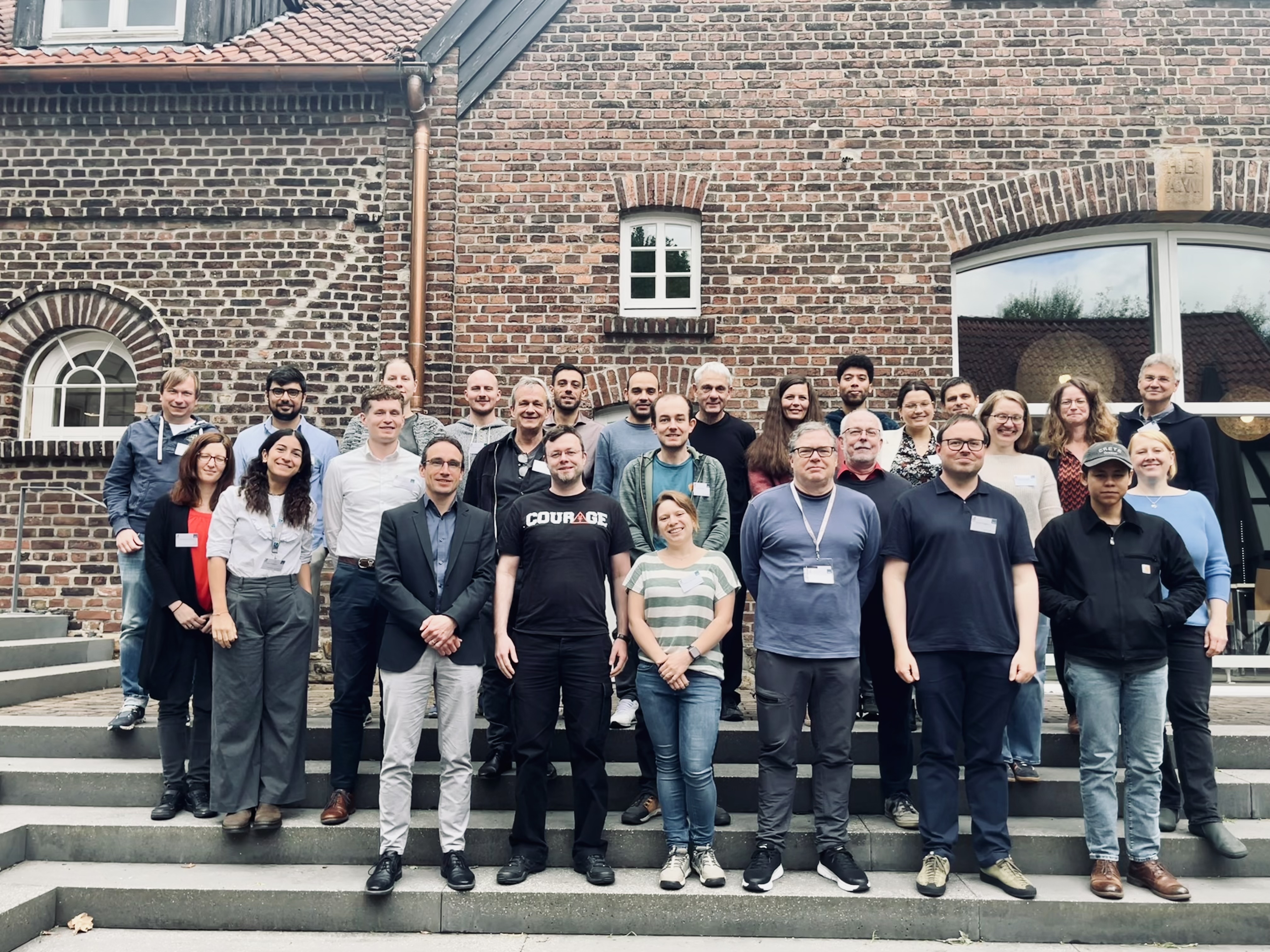 On May 11–12, scientists from plasma science and related research fields met at Beckmanns Hof at Ruhr University Bochum for the 5th Workshop on FAIR Data in Plasma Science. The workshop was organized by Kiel University, Leibniz Institute for Plasma Science and Technology Greifswald, and Ruhr University Bochum.
The workshop fostered a highly interactive atmosphere, with participants enthusiastically engaging in discussions on FAIR data practices and their implementation across different disciplines. A particular highlight of the event were the interactive sessions, in which hands-on activities and practical examples demonstrated how FAIR data principles can be integrated into everyday laboratory work.
- Details
Professor Uwe Czarnetzki Receives ISPlasma Special Recognition Award
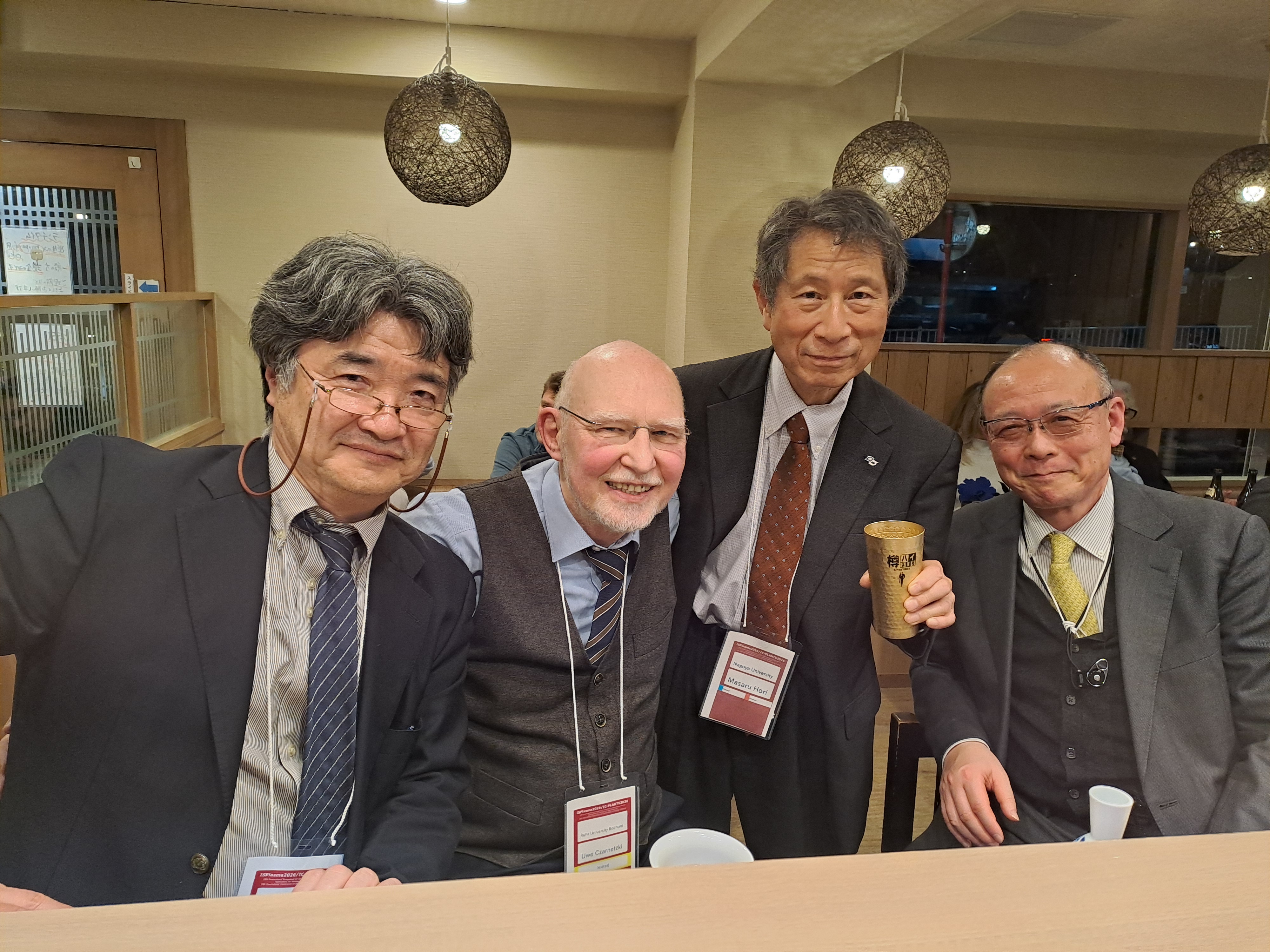 We are pleased to announce that Professor Uwe Czarnetzki has received the ISPlasma Special Recognition Award in honor of his outstanding and sustained contributions to the ISPlasma conference series.
Since the early years of ISPlasma, Professor Czarnetzki has played a central role in shaping its scientific foundation and long-term development. Through his numerous presentations at ISPlasma, including five plenary, keynote, and invited presentations, as well as six tutorial lectures, Professor Czarnetzki has significantly enriched the education of students and young researchers.
In addition to his scientific contributions, Professor Czarnetzki has also served continuously on the ISPlasma Advisory Committee since 2009, helping to guide the conference's strategic direction and evolution. His achievements were previously recognized with the ISPlasma Prize in 2018.
The ISPlasma Special Recognition Award highlights his sustained excellence in research, education, and service. We congratulate Professor Czarnetzki on this well-deserved recognition.
- Details
Dr. Ibrahim Sadiek Appointed Subcommittee Chair for CLEO 2027
Dr. Ibrahim Sadiek has been appointed Subcommittee Chair for Science & Innovation 13 (S&I 13): Active Optical Sensing within the CLEO conference series, one of the leading international conferences in laser science and photonics, following his service as a subcommittee member in 2026.
S&I 13 covers a wide range of topics in active optical sensing, including spectral, acoustic, and navigational sensing, as well as laser-based diagnostics of plasmas, combustion, and extreme environments. It also includes UV, visible, infrared chemical sensing, and integrated sensing approaches.
As Subcommittee Chair, Dr. Sadiek will lead the selection of committee members, coordinate the identification of invited speakers, and oversee the abstract review process. He will also contribute to shaping the technical program of CLEO 2027.
CLEO 2027 will take place from May 2 - 7, 2027, in Long Beach, California, USA.
Link to CLEO webpage: https://cleoconference.org
- Details
Ruhr University Bochum shines in a prestigious European research network
We are happy to announce that the ‘NICEST’ MSCA Doctoral Network has been awarded a perfect score of 100/100 by the European Commission. This distinguished recognition underscores the university’s commitment to cutting-edge research and innovation.
NICEST, which stands for Network for Integration of Comb Experimental Spectroscopic Techniques, is a collaborative effort involving top European academic and industrial partners. The project aims to revolutionize frequency-comb spectroscopy by integrating broadband coverage, ultra-high sensitivity, and extreme spectral resolution.
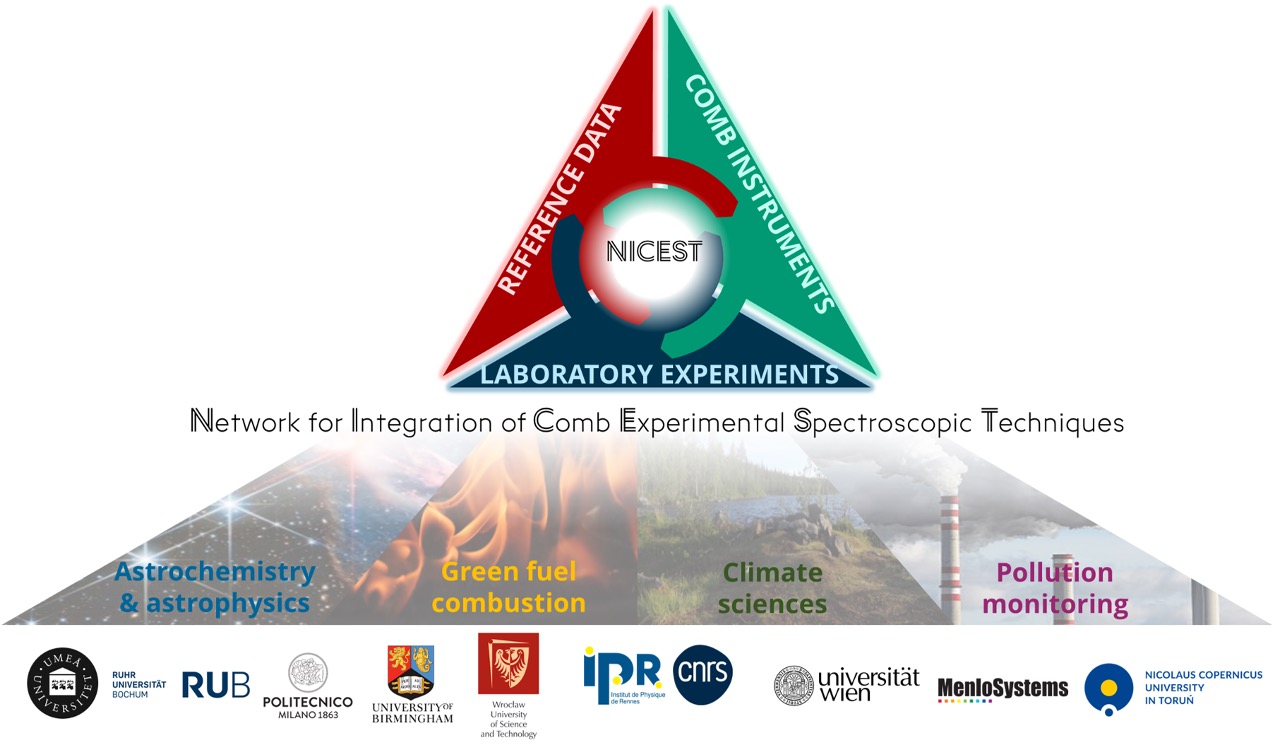 Dr. rer. nat. Ibrahim Sadiek from the Chair for Experimental Physics V, led by Prof. Dr. Jean-Pierre van Helden, is spearheading Ruhr University Bochum’s participation. Dr. Sadiek’s expertise in frequency comb spectroscopy and molecular and chemical physics will be instrumental in the project’s success.
The NICEST consortium will train 11 Doctoral Candidates through interdisciplinary research and structured mobility between partner institutions and industry.
The network is set to commence in early 2027.
- Details
5th Workshop on FAIR Data in Plasma Science (FDPS-V)
We are pleased to announce the 5th Workshop on FAIR Data in Plasma Science (FDPS-V), which will take place on 11–12 May 2026 at Ruhr-Universität Bochum (RUB), Germany. Virtual participation will also be available. The workshop continues the annual series of events on research data management within the low-temperature plasma (LTP) community. Its goal is to present current developments and to strengthen community exchange on this topic.
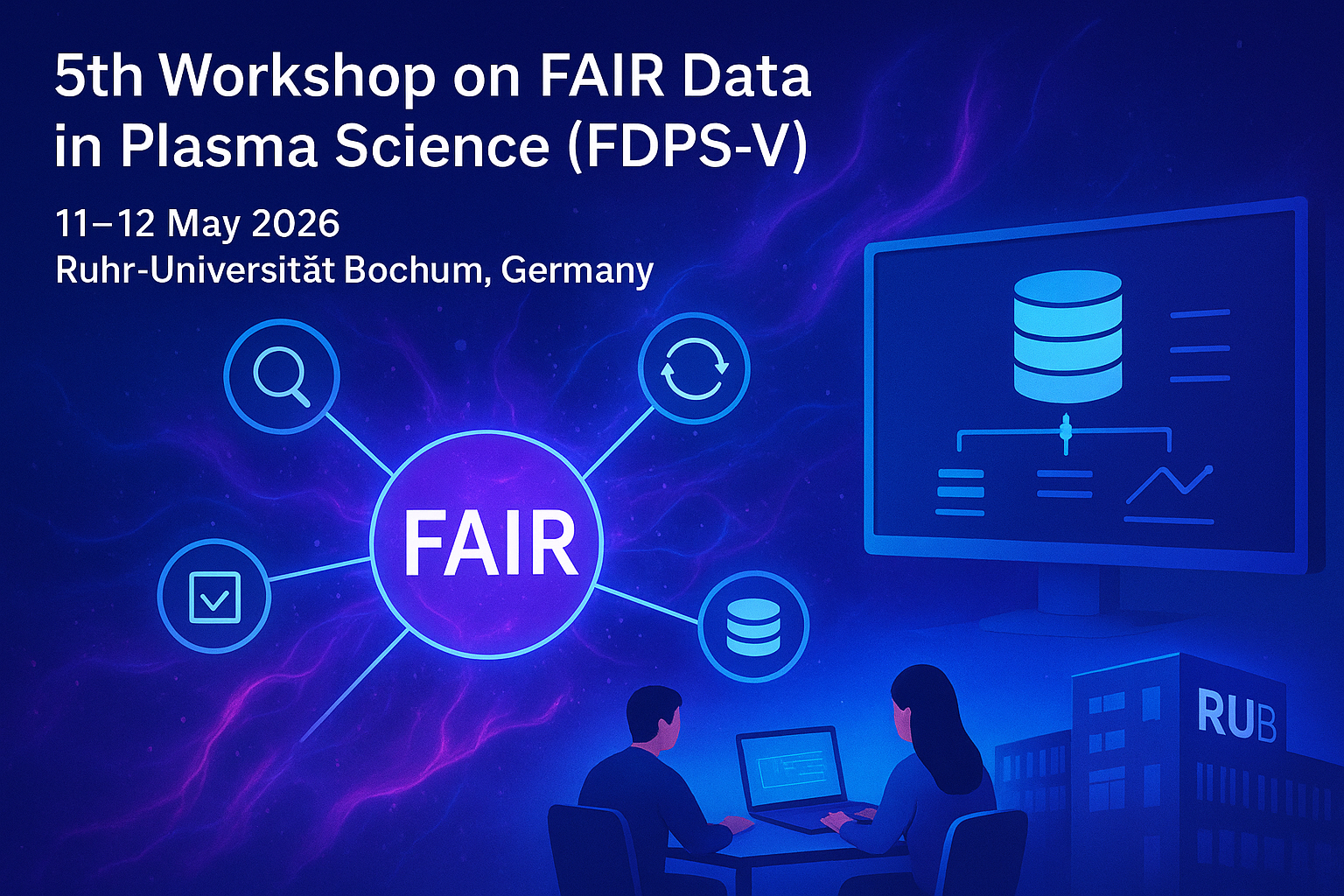 FDPS-V will provide an overview of successful solutions for collaborative research data management aimed at making data findable, accessible, interoperable, and reusable (FAIR), thereby fostering broader use of data-driven research methods. The program will cover best practices for everyday research activities as well as infrastructure tools for research data handling. Successful examples from plasma research groups and collaborative research centers will be presented. In addition, future developments and standardization efforts for data sharing and reporting within the LTP community will be discussed.
The workshop will be held as a hybrid event, and participation is free of charge. Please save the date and register via the link provided on the workshop website.
Attendance in person at INP is limited, so early registration is encouraged. The application form will be closed on 3th May, 2025.
- Details
Project week during the autumn holidays
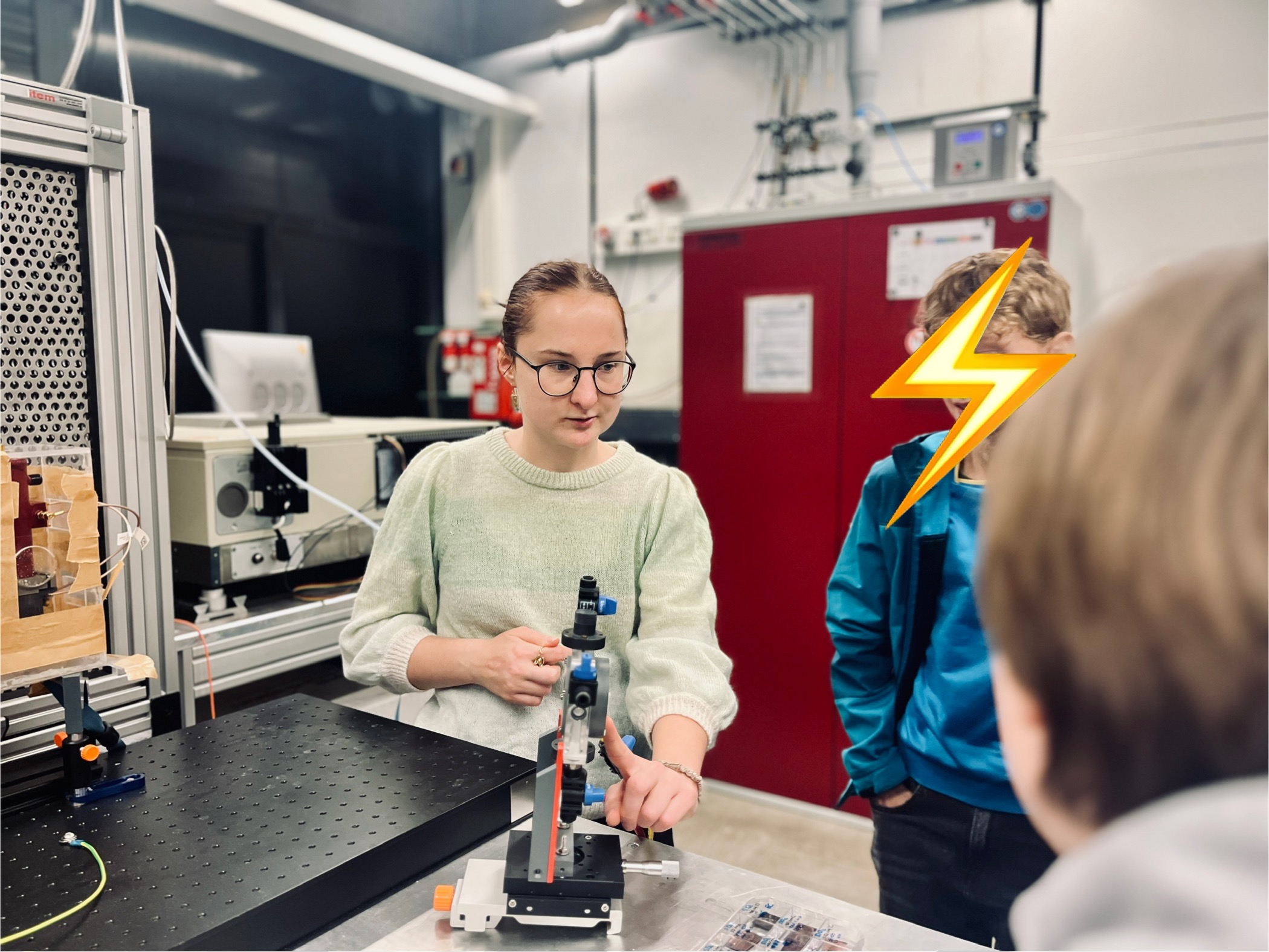 During the autumn holidays, highschool students in classes 8 and 9 enjoyed an eventful week full of physics, experiments and research at the Alfried Krupp Schülerlabor at the Ruhr University Bochum. In the workshop ‘From Plasma to Gold Coating,’ the students discovered the exciting characteristics of luminous gases and their numerous applications, such as in surface coating. They visited laboratories, observed researchers at work and learned that plasmas can also be ignited in liquids. In Prof. Scherer's lecture ‘From Diamonds, Pencil Tips and Symmetries,’ they learned how to (theoretically) turn a pencil tip into a diamond. Other highlights included a visit to the planetarium, meals together in the mensa and a physics duel followed by pizza. We would like to thank all participants for their curiosity and fascination for physics and are already looking forward to the next project week!
- Details
International School on Low Temperature Plasma Physics
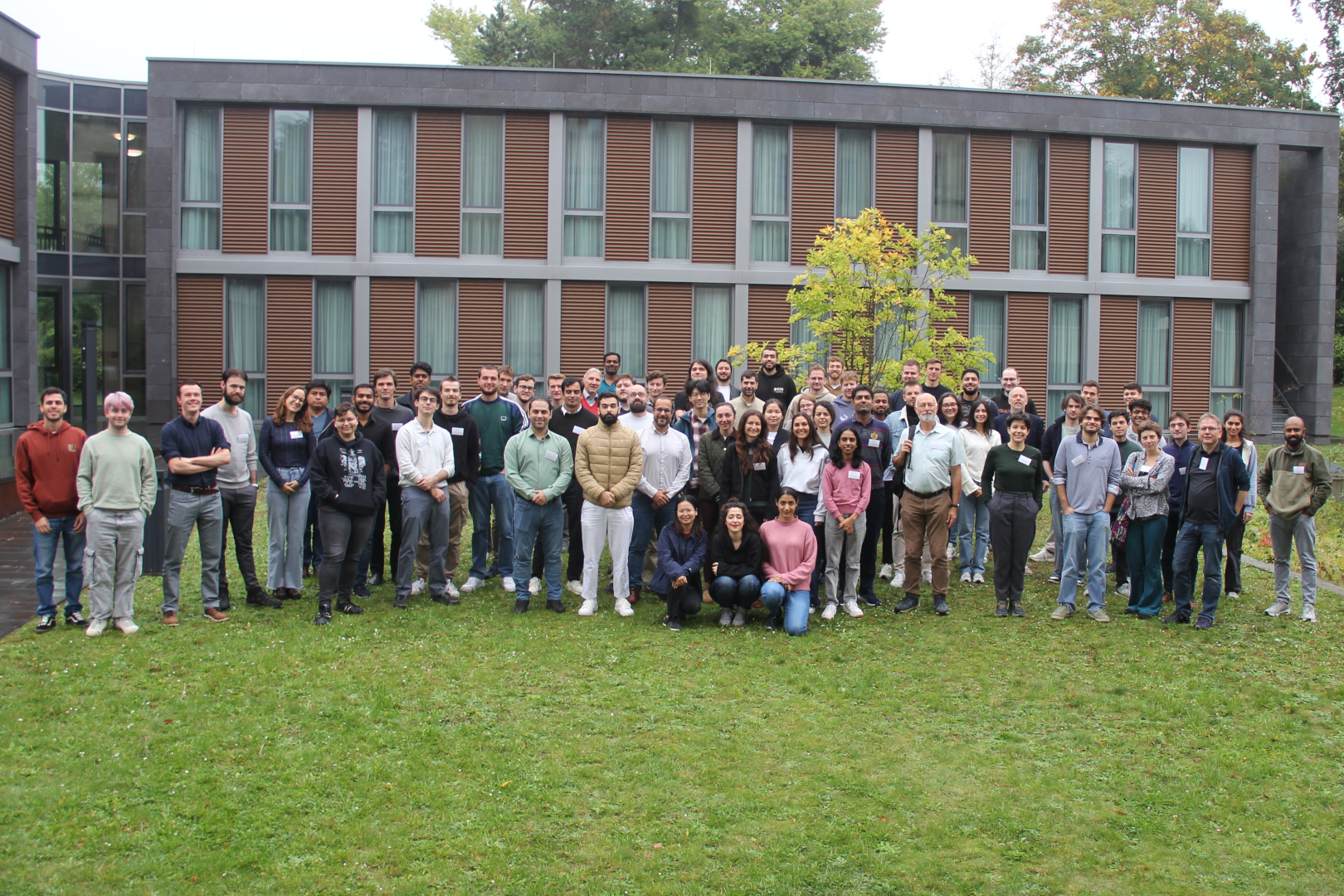
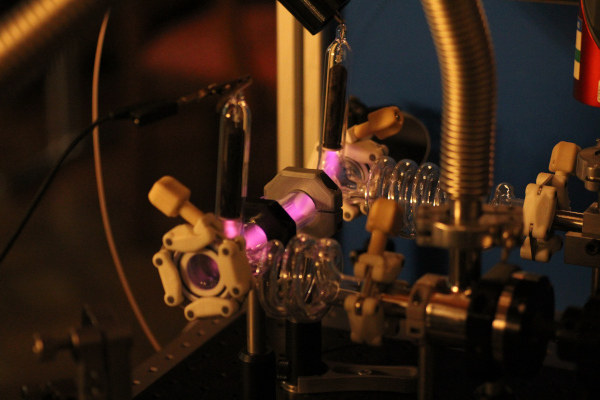 In the beginning of October, chosen Master and PhD students within the field of plasma physics, engineering and chemistry had the chance to get in contact with leading experts and lecturers. During the International School on Low Temperature Plasma Physics and the subsequent Master Class on Smart organic coatings by plasmas, fundamentals of plasmas and cutting-edge reserach has been discussed in lectures and during a poster session. Hands-on experience was obtained during three workshops lead by reknown professors from France and Portugal.
Since 28 years, the plasma school is organized by leading experts in the field of plasma physics. This year, the international chair was located at University of Mons in Belgium, while the local organizing team was located at Ruhr University in Bochum. The plasma school has also been funded by the CRC 1316 and the Research Department "Plasmas with Complex Interactions".
- Details
10th anniversary of the RAPP Center
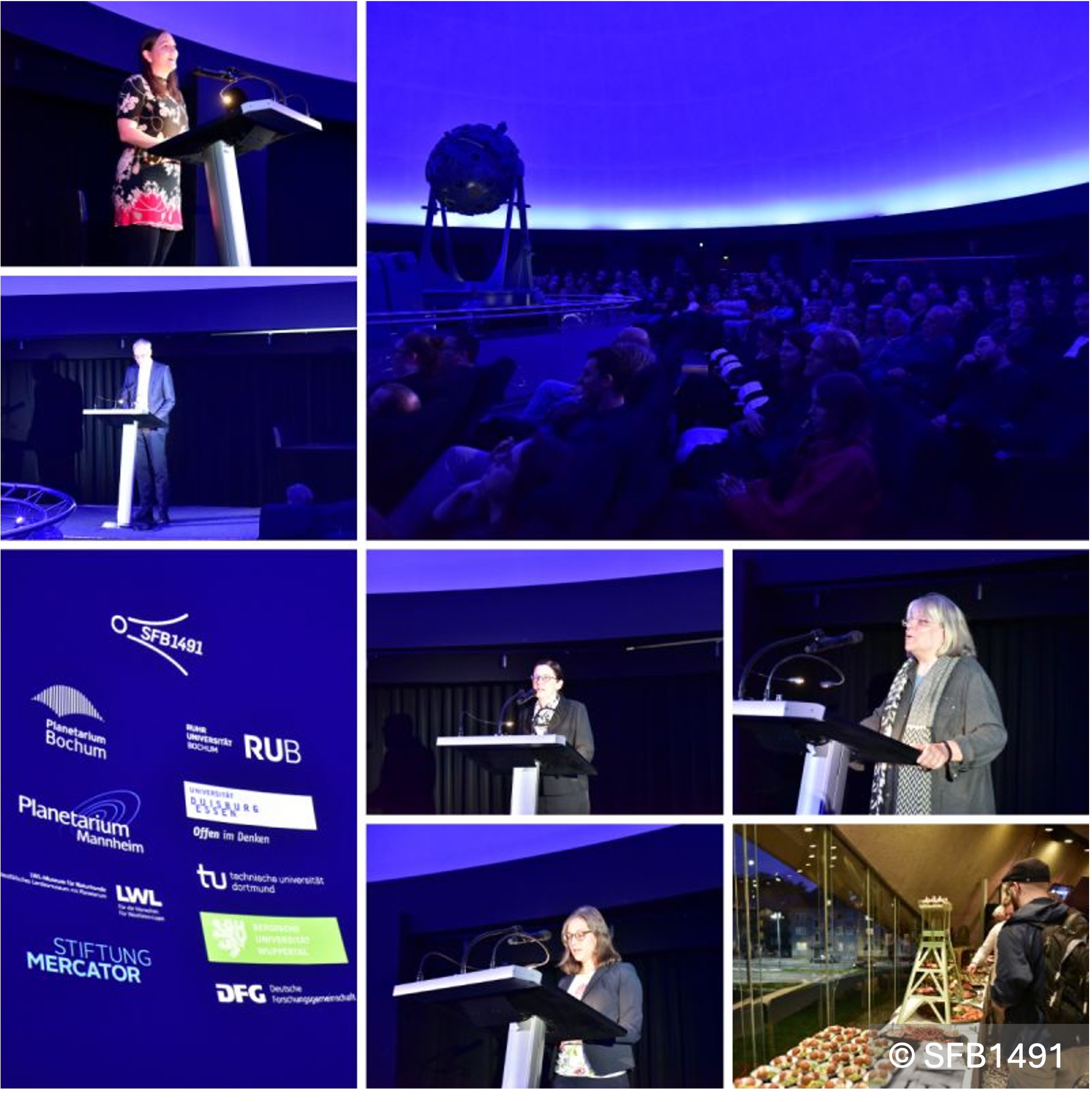 We were delighted to celebrate the 10th anniversary of the RAPP Center with some special events!
The celebrations began with a festive ceremony attended by representatives from all participating universities, including Prof. Albert (Rector of the University of Duisburg-Essen), Prof von Keudell(Prorector of Ruhr University Bochum), and Prof. McElvany (Prorector of TU Dortmund ) .
A true highlight of the evening was the premiere of our planetarium show „Unser exotisches Universum“ (“Our Exotic Universe”), which captivated the audience with fascinating insights into the science of our CRC.
The evening concluded with a reception and refreshments, providing a wonderful opportunity for conversation and connection.
The celebrations continued with a scientific conference featuring international invited speakers, held in the unique atmosphere of the German Mining Museum „Deutsches Bergbaumuseum“.
Over two days, participants engaged in stimulating discussions covering the wide range of topics represented within the RAPP Center. The event fostered lively scientific exchange and helped to strengthen the sense of community within our research network.
We are proud of what the RAPP Center has achieved over the past decade and look forward to many more years of exciting collaboration and discovery!
Picture: Some impressions from our premiere celebration.